REVIEW · MADEIRA
Madeira: Guaranteed Whales or Dolphins Watching Tour
Book on GetYourGuide →Operated by Azul Diving Madeira - Blue Safari Madeira · Bookable on GetYourGuide
Whales off Madeira usually find you. On Azul Diving Madeira’s Blue Safari Madeira tour, you head out from Funchal on a custom boat made for whale watching, with land-based spotters helping the crew line up the good stuff. I like the small group size (up to 12) because you stay close to the action instead of craning your neck.
I’m also a fan of the science-first guiding. Marine biologist Camila (and other guides like Fernanda in the same role) explain what you’re seeing as you see it, covering species like pilot whales and multiple dolphin types. The ethical viewing approach matters here too: there’s no feeding and no chasing.
One consideration: this is not a universal fit. The tour is not suitable for children under 6, pregnant women, or people with back problems, and it runs for two hours with no food or drinks included.
In This Review
- Quick take: the parts that make this Madeira whale watch work
- Entering the new marina in Funchal: where the tour starts
- Boarding a small RIB: why the boat design affects what you see
- Two hours off Madeira: how the spotting setup turns luck into odds
- What you can see: dolphins first, whales when the conditions line up
- Ethical whale watching in practice: no feeding, no chasing
- Extra wildlife chances: turtles, sea birds, and other ocean surprises
- The stop-by-stop ride plan: from board to pier
- The free ticket guarantee: a safety net for unpredictable ocean days
- Price and value: is $55 a fair deal in Madeira?
- Who should book this (and who should rethink it)
- What to do before you go: small choices that help your day
- How this tour compares to a generic whale watch
- Should you book this Madeira Guaranteed Whales or Dolphins Watching Tour?
Quick take: the parts that make this Madeira whale watch work
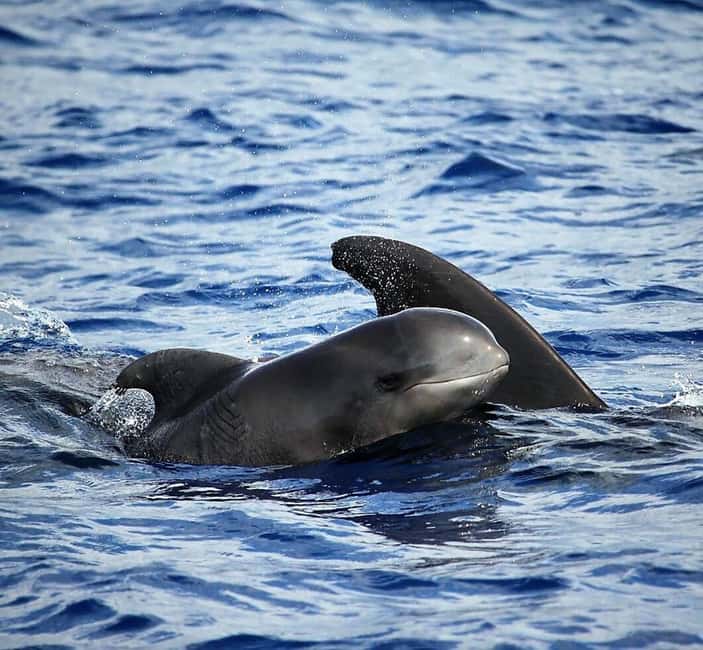
- Up to 12 passengers on a custom-made whale-watching boat for better sight lines
- Land-based professional spotters plus a high success rate (98% of tours result in sightings)
- Real wildlife encounters with dolphins and whales off Madeira’s coast, without cornering
- Eco-minded, research-supporting policy (no feeding, no chasing)
- Free return ticket if you don’t see whales or dolphins
- Extra marine life you might catch in the mix, like turtles and sea birds
Entering the new marina in Funchal: where the tour starts
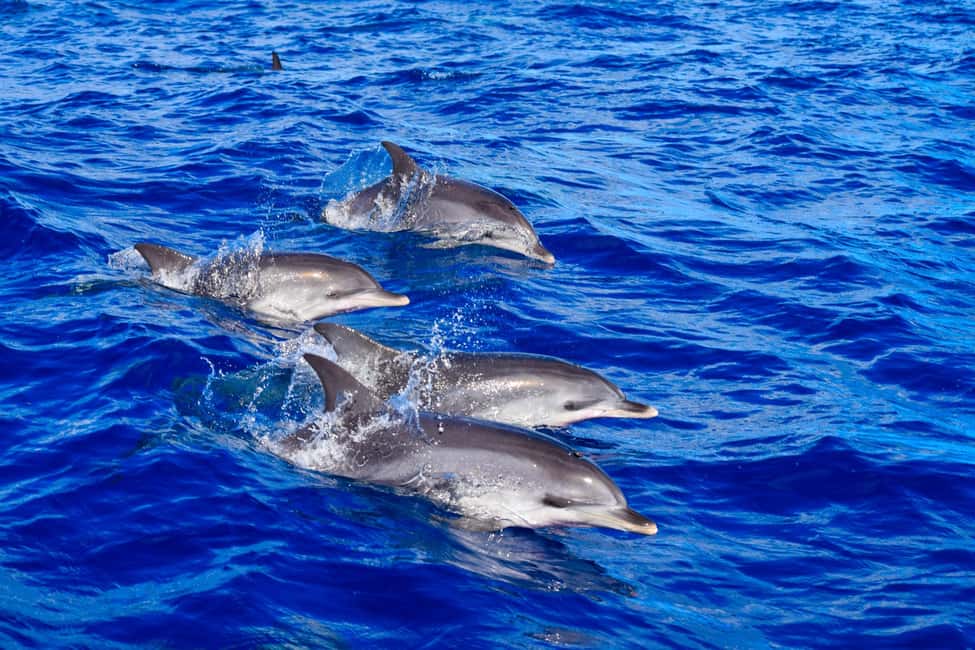
Your whale and dolphin watching starts at Blue Safari Madeira | Whale and dolphins watching, at the new marina of Funchal. Plan to meet the guide directly at the speed boat in front of door 4, described as the last one on the left when you’re looking at the sea. Arrive 20 minutes before departure so you’re not rushing when check-in is underway.
If you’re driving, park at the Almirante Reis parking lot, which is a few minutes from the boat. The Marina Park is private, so don’t aim for that one if you want an easy walk. If you’d rather not guess, the operator provides a short video with directions; using Google Maps for the pin is also recommended.
This matters because a spotting tour is timing-sensitive. When the crew has ocean “intel,” you want to be ready to go the moment they’re set.
You can also read our reviews of more whale watching tours in Madeira
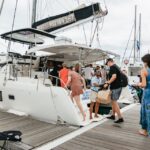
Boarding a small RIB: why the boat design affects what you see
This is a custom-made whale-watching boat built for speed, comfort, and close viewing. The key practical detail is the max capacity of 12 passengers, which keeps the group compact and helps everyone see both sides as you move and the crew scans.
From what I’ve seen in how this operation runs, the boat type is also part of the ethics: a smaller, purpose-built approach lets the crew watch without turning the encounter into a chase. The captain and crew focus on safe, controlled movements while still getting you to the areas where pods are likely to be passing through.
You’ll get life jackets as part of the tour, and the whole experience is designed around a classic RIB-style outing: you’ll feel the ride. If you’ve chosen Madeira for marine wildlife first, this is usually the right trade-off for getting real viewing time at sea.
Two hours off Madeira: how the spotting setup turns luck into odds
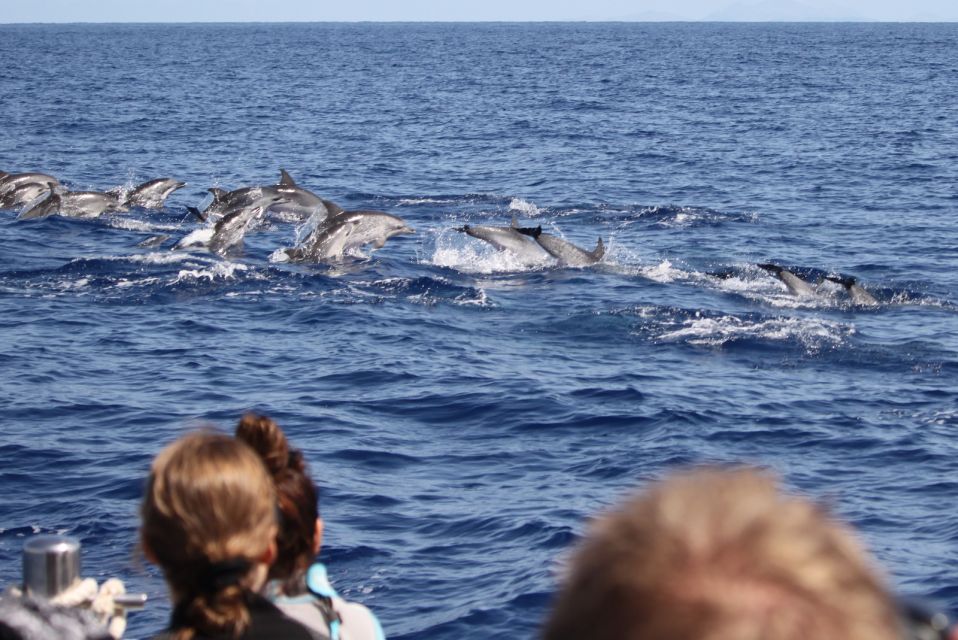
The outing itself is 2 hours of boat cruise and wildlife viewing in the waters around Madeira. There’s a “spotting network” at work: you’re not only watching from the boat, you’re also getting help from land-based professional spotters. That’s a huge difference from tours that only react when sightings appear.
Madeira is known for a high concentration of cetaceans, and the tour states a 98% success rate for tours resulting in whale or dolphin sightings. In plain terms: this operator isn’t pitching an all-day ocean guess. They’re using local eyes and marine know-how to find animals more consistently than luck alone would allow.
As you cruise, your guide (often a marine biologist) gives you information that’s meant to help you recognize animals in the moments that count: surfacing patterns, how different dolphins move, and what kinds of whales you might be seeing. It makes the experience feel less like sightseeing and more like learning to read the ocean.
What you can see: dolphins first, whales when the conditions line up
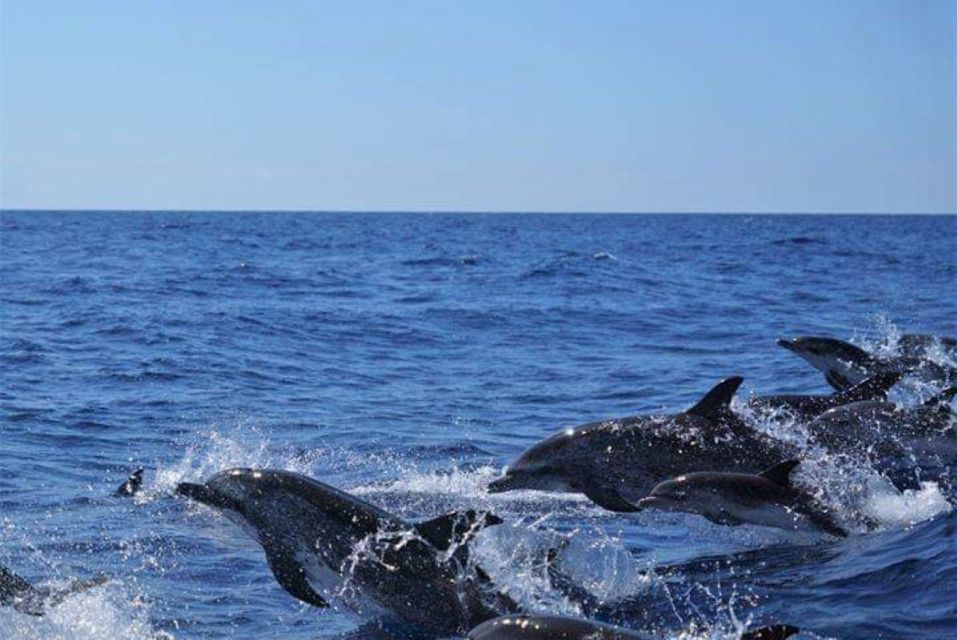
You’re watching for cetaceans off Madeira, and the tour names a range of possible species. On the dolphin side, you could spot Common Dolphin (Delphinus delphis), Spotted Dolphin (Stenella frontalis), and Bottlenose Dolphin (Tursiops truincatu).
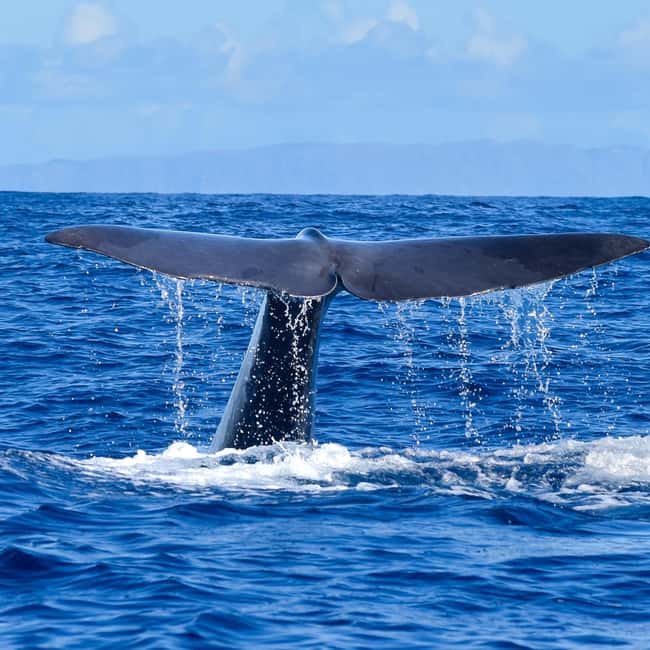
For whales, the list includes Sperm Whale (Physeter macrocephalus), Pilot Whale (Globicephala macrorhynchus), and Bryde’s Whale (Balaenoptera edeni). The big takeaway for your planning is that you’re not limited to one animal type. You’re getting a mixed-species search, with dolphins often appearing as the lead act.
Even when the whale spotlight is the headline, the operational success is built on dolphins and whales showing up in the same ocean “neighborhoods.” That’s why the land spotters are so important: they increase the odds that your 2-hour window overlaps with a pod’s movement.
Ethical whale watching in practice: no feeding, no chasing
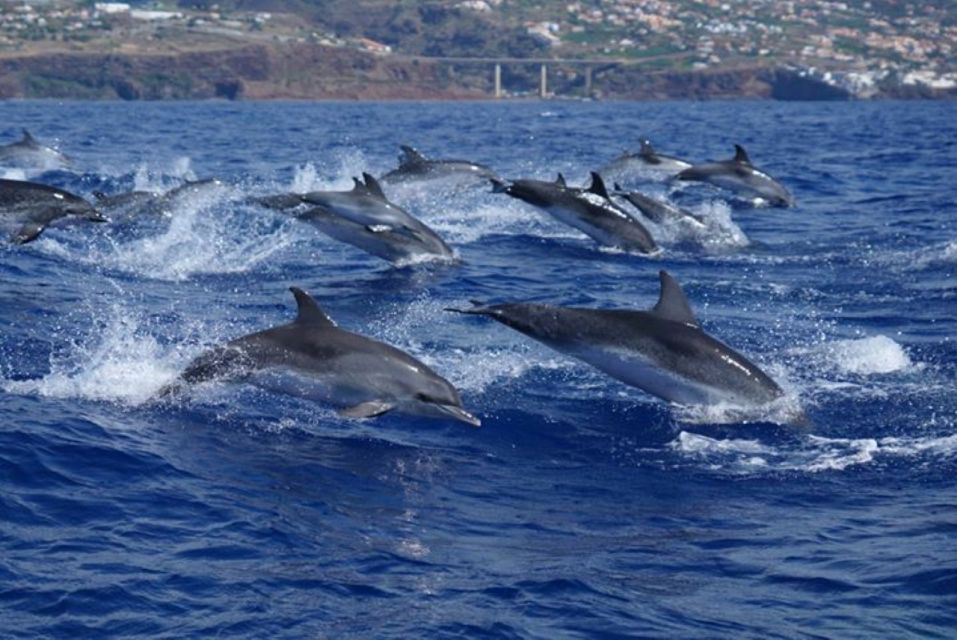
A big reason this tour earns strong marks is the behavior policy. The approach is ethical viewing: no feeding and no chasing. Your crew isn’t trying to force an animal to perform for the boat.
Instead, you watch where the animals choose to be. That’s not just feel-good wording. It changes how you experience the encounter, because you spend time observing natural behavior rather than trying to catch up to a stressed animal that’s being driven away.
Guides also tend to emphasize marine research and conservation. The tour states that you support marine research with every trip, and that’s reflected in the “we’re here to observe” tone onboard. It’s the kind of guiding that helps you feel you’re part of a responsible system, not just buying a thrill.
You can also read our reviews of more dolphin watching tours in Madeira
Extra wildlife chances: turtles, sea birds, and other ocean surprises
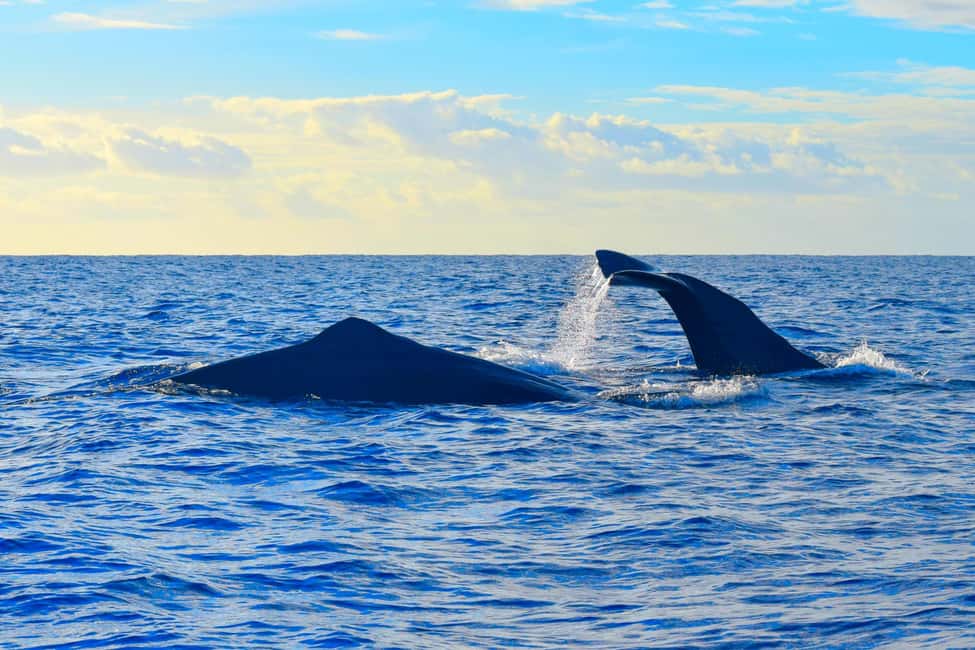
Whales and dolphins are the goal, but the tour also notes additional wildlife sightings. You may see turtles and sea birds, plus other marine life depending on what’s in the area.
On some outings, you might even run into smaller surprises that aren’t the main target but make the day feel more alive. The key is to stay open: the ocean is dynamic, and the crew’s job is to follow what shows up in the field, not to force a script.
The stop-by-stop ride plan: from board to pier
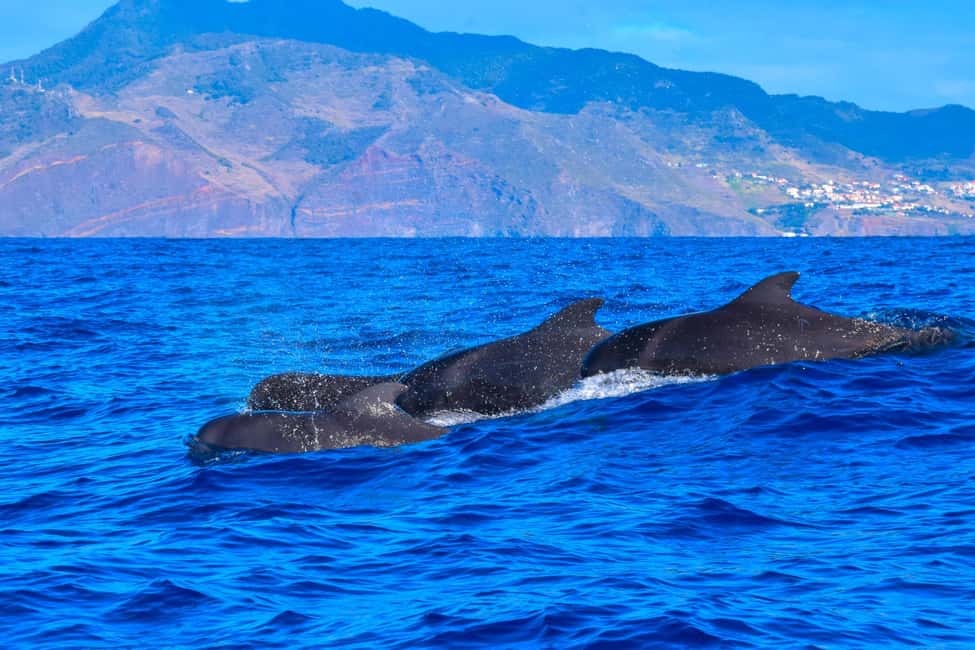
Here’s how the experience typically unfolds around the three touchpoints.
Stop 1: Blue Safari Madeira at the new marina (start).
You meet the guide at the speed boat in front of door 4 and head out after the group gets briefed and settles. Life jackets are part of getting ready, and the crew uses this time to set expectations for what you’ll do for the next two hours.
Stop 2: Out past Funchal for the 2-hour viewing window.
This is the heart of the tour: boat cruise, marine life viewing, and whale and dolphin watching. Land spotters guide the search, and your guide helps you identify what you’re seeing in real time.
Stop 3: Back to the marina pier (finish).
When the two hours are up, you return to the same meeting point to wrap up the outing. If you had a no-sighting trip, the tour includes a free next ticket (details below).
The free ticket guarantee: a safety net for unpredictable ocean days
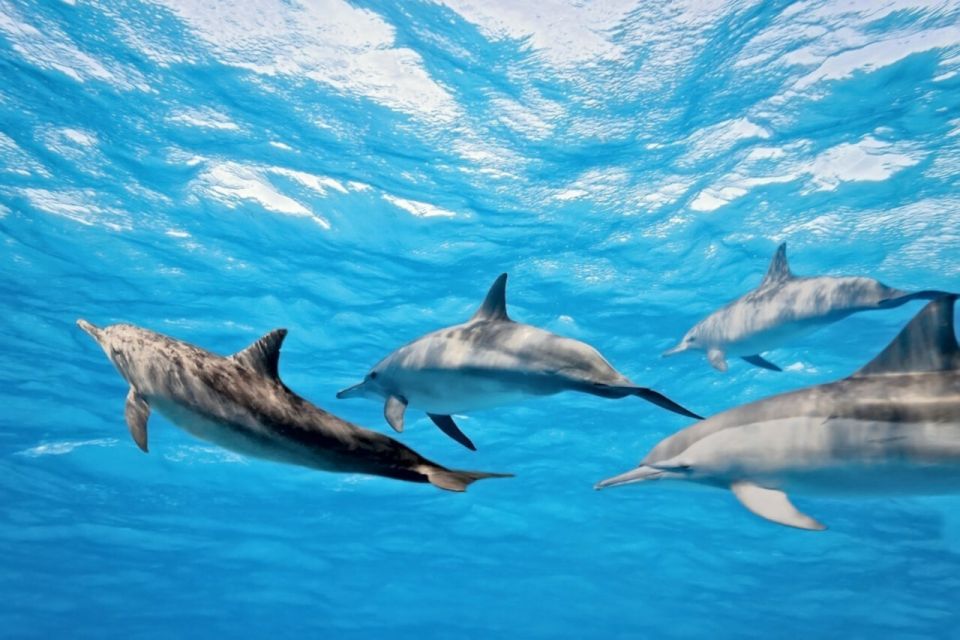
Wildlife watching runs on real-world conditions, not guarantees. This tour handles that with a clear policy: if there is no whale or dolphin sighting, you will receive another ticket for free.
That matters for value because you’re paying for a targeted experience, not a generic boat ride. Even if your first outing doesn’t click, you don’t lose your money on the “wrong day.” It also makes the crew’s effort feel more accountable, since the operator has built the guarantee into the experience design.
Price and value: is $55 a fair deal in Madeira?
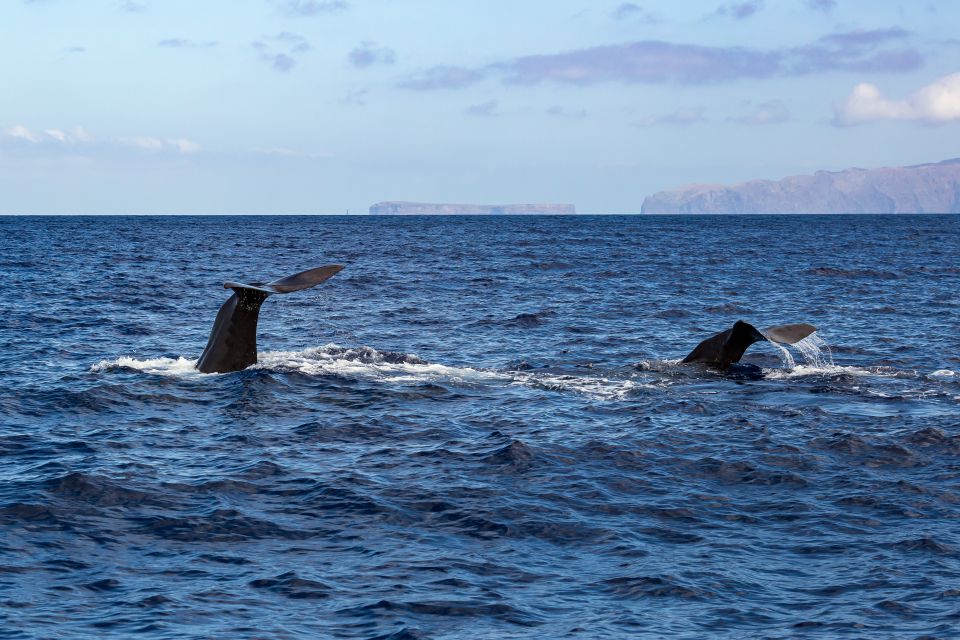
At about $55 per person, the price feels reasonable for a guided, small-group, high-speed whale-watching tour in Madeira, especially because the cost includes more than just “get on a boat.” Your ticket covers the boat cruise, life jackets, and professional guidance from naturalists or marine biologists, plus land-based spotters that improve the odds.
You also aren’t paying extra for the most important part of the mission: ethical viewing and a research-supporting approach. And if you miss sightings entirely, the free ticket guarantee protects you. The only thing you need to handle yourself is food and drinks since they’re not included.
If you’re comparing options, I’d treat this as a “you’re paying for access + expertise + better odds” ticket, not just a ticket to see something if it happens to appear.
Who should book this (and who should rethink it)
This tour is a strong fit if you:
- Want real wildlife watching with ethical rules, not a show
- Appreciate marine biology-style explanations (you might hear from guides like Camila or Fernanda)
- Prefer a small group approach with up-close viewing from a compact boat
It’s not suitable if you:
- Have back problems
- Are pregnant
- Are traveling with children under 6
If any of those apply, it’s smart to choose a different Madeira activity that matches your comfort level and safety needs.
What to do before you go: small choices that help your day
You’ll get the most out of the tour if you treat it like a timed outing. Arrive early, find the correct door (door 4), and be at the boat at the meeting time. Ocean sightings don’t wait for late arrivals.
Also, plan around the fact that food and drinks aren’t included. If you’re prone to hunger between activities, plan a snack or a meal before you head to the marina. The tour runs for two hours, so having eaten ahead keeps you focused on the animals instead of your stomach.
How this tour compares to a generic whale watch
The best part of this experience is that it’s built around odds and respect. Many whale-watching trips are “go out and hope.” Here, the combination of land-based spotters, a small group, and an ethical no-chasing approach makes it feel more controlled and more conservation-minded.
You’ll also get more than just pointing. Your guide’s job is to help you understand what’s in front of you, including different dolphin types and whale possibilities.
Should you book this Madeira Guaranteed Whales or Dolphins Watching Tour?
I’d book it if your priority is a focused, ethical Madeira whale and dolphin watch with real expertise and better odds than most. The up to 12 group size, the land-spotter system, and the free ticket guarantee are the three reasons this works as a “plan it once and feel good about it” choice.
If you’re in a category the tour lists as not suitable (under 6, pregnant, or back problems), you should skip it and choose a different Madeira activity that fits your needs.
With a rating of 4.8 from 428 reviews, this is one of the more consistently well-reviewed ways to see cetaceans off Funchal without turning wildlife into a performance.