
REVIEW · MADEIRA
Hands-On Bolo do Caco Baking Class with a Madeiran Family
Book on Viator →Bookable on Viator
A bolo do caco class is bread with a pulse. This 3-hour, English-friendly experience takes you into a Madeiran home where you learn the bread’s meaning, roll up your sleeves, shape it by hand, and watch it bake on a hot stone. The best part is the human scale: you’re treated like a friend in a real kitchen, not a class funnel.
I love the hands-on baking itself. You knead, shape, and get that warm, flour-dusted satisfaction of making something you can eat right away. I also love the food finish—bolo do caco comes out alongside Madeiran staples like garlic butter, Portuguese cheese, and chouriço. One thing to consider: because this is hands-on and in a home kitchen, you’ll want comfortable clothes and a ready-to-get-a-bit-messy mindset.
In This Review
- Key highlights you’ll feel immediately
- A Madeiran home kitchen, not a bread museum
- History first, so the bread has meaning
- Rolling, kneading, and shaping by hand
- The hot-stone baking step (where it smells like home)
- The table payoff: garlic butter, Portuguese cheese, and chouriço
- Small group dynamics: why max 5 people is a big deal
- Who should book this bolo do caco class?
- Price and logistics, without the fluff
- Should you book this bolo do caco baking class?
- FAQ
- How long does the bolo do caco baking class last?
- Is the class offered in English?
- What’s the group size?
- Where is the meeting point?
- Does the tour end at the same place?
- What should I wear for this class?
- Are kids and babies welcome?
- Are service animals allowed?
- Will I receive a ticket on my phone?
- What is the cancellation policy?
Key highlights you’ll feel immediately
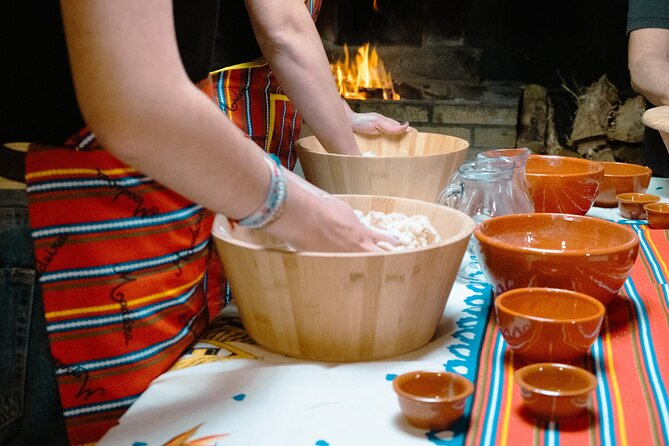
- A max group of 5 means you get real attention while you work the dough
- Family-led bread making guided by Madeira home expertise (including 40+ years of know-how)
- Hot-stone baking lets you see how the bread transforms as it cooks
- Eat what you make with garlic butter, Portuguese cheese, and chouriço at the table
- Kids are welcome with room for them to play without derailing the experience
A Madeiran home kitchen, not a bread museum
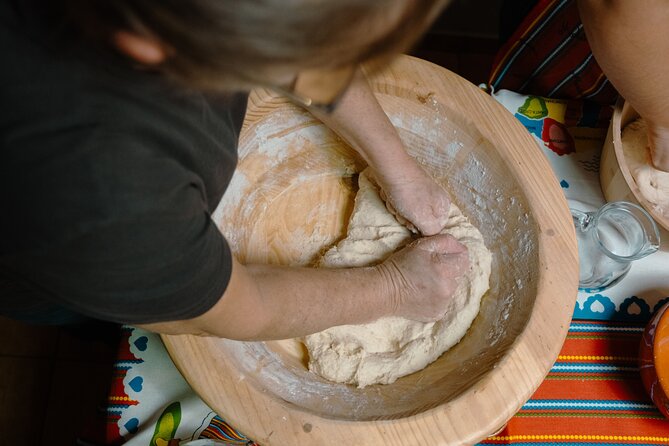
This is one of those Madeira experiences that makes the island feel close. You start at Travessa do Lombo do Alho, 9360, Portugal, and you’ll end back at the same meeting point. No awkward transfers. No “stand here and watch.” It’s your hands on the dough from the start.
Because it’s offered for English speakers and capped at no more than 5 travelers, the pacing is flexible. The family can slow down if you have questions about the steps, and they can speed up if you’re picking up the method quickly. That small-group setup matters more than it sounds. Big groups can turn bread making into a blur. Here, you’ll actually do the work.
Also, this takes place in a family home, not a formal teaching studio. That comes through in the way people interact. The review feedback points to Tonia and her aunt as especially kind and accommodating, and it fits the vibe described: you’re treated as a friend, not a customer. You’ll likely feel that warmth the moment you arrive.
You can also read our reviews of more tours and experiences in Madeira.



History first, so the bread has meaning
You don’t just get thrown into flour and heat. You’ll begin with the history and cultural significance of bolo do caco. That matters because the bread isn’t treated like an ordinary roll on Madeira. It’s part of local food identity—something people connect to daily life and tradition.
Learning that context gives you a better reason to pay attention during the baking steps. When you understand that this is an iconic Madeira bread with a story behind it, the kneading and shaping feel less like a chore and more like respectful practice. You’re not just copying instructions. You’re participating in something local.
And since the experience is family-style, you can expect the “how” and the “why” to go together. If you’re the type who likes food history, this early piece will click. If you’re more practical, it still helps, because it puts the bread technique into perspective.
Rolling, kneading, and shaping by hand
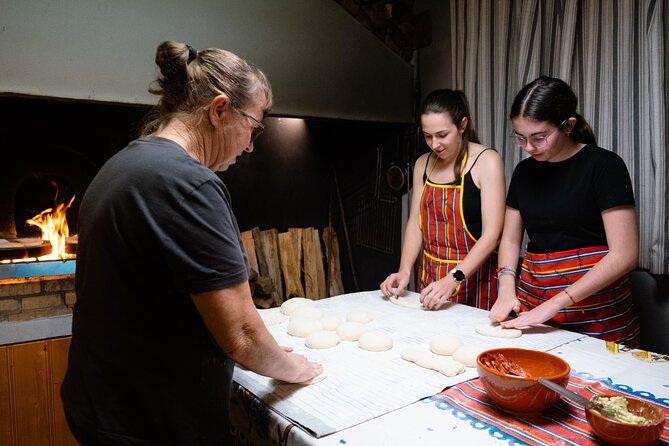
This is where the class gets real. After the background chat, you’ll roll, knead, and shape the dough by hand. There’s no pretending you know the technique already. You’ll be guided through it, and you’ll get the chance to try the motions yourself.
A key detail for your comfort: wear comfortable clothes, because you’ll be hands-on. Even if you’re careful, dough has a way of getting where it shouldn’t. Think flexible top, comfortable shoes, and maybe something you don’t mind getting a little flour on. If you’re traveling light, don’t make this your “only outfit” day.
If you’re traveling with kids or babies, this setup is designed with them in mind. They’re welcome, and there’s space for them to play without disrupting the baking process. That’s a big deal for families, because a lot of cooking experiences turn into a scramble. Here, the format seems to anticipate real life.
The hot-stone baking step (where it smells like home)
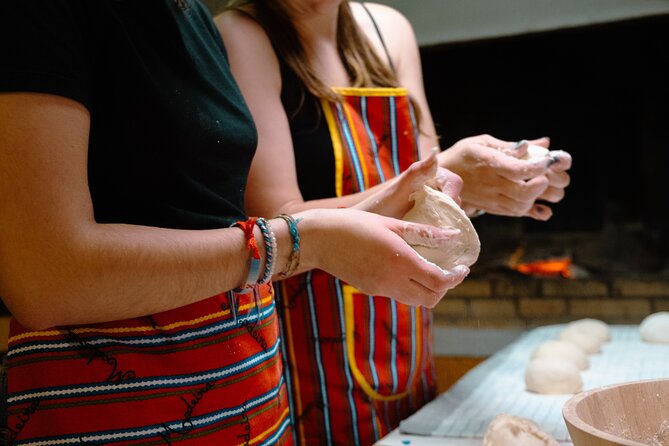
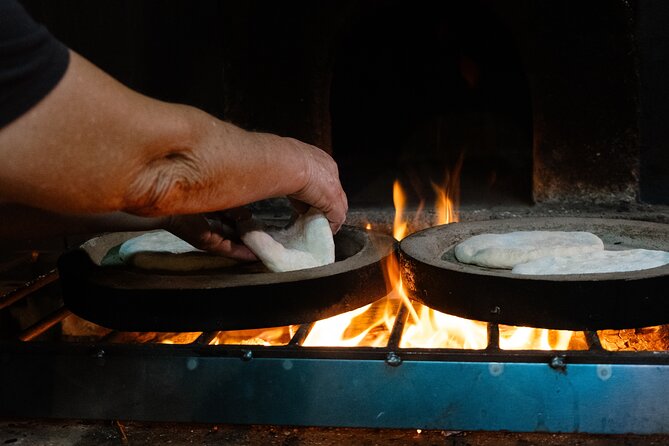
Then comes the moment your senses start doing most of the talking. The bread cooks on a hot stone. As it bakes, the kitchen warms up and the whole place fills with the smell of freshly baked bread—exactly the kind of aroma that makes you forget you had a schedule.
From a practical point of view, hot-stone cooking changes how you experience the bread. You’re not watching a digital timer. You’re seeing live bread transform in front of you. That’s usually the difference between eating something and learning how it becomes edible.
This step is also why the family atmosphere matters. A home kitchen isn’t sterile. You’ll likely hear laughter, share stories, and feel like you’re part of the group. One review-style takeaway was that the hosts make the day feel easy and welcoming, which is perfect for a tactile food activity like this.
The table payoff: garlic butter, Portuguese cheese, and chouriço
Once the bolo do caco is ready, you gather around the table. This is the payoff phase: the bread you made doesn’t just get photographed and stored. You eat it while it’s fresh, warm, and at its best.
The pairing options include:
- Garlic butter
- Portuguese cheese
- Chouriço
These choices make sense. Garlic butter adds salt, tang, and comfort. Cheese brings richness and a local touch. Chouriço adds that savory, smoky heat that pairs naturally with bread. Together, they turn the lesson into a full meal moment instead of a small snack.
And the setting isn’t just inside-your-head romantic. The experience mentions the backdrop of the mountains, which adds a calm, “you’re on Madeira” feeling while you sit down. Even if you usually skip scenic talk, eating warm bread with a view beats a lot of restaurant meals for pure atmosphere.
You can also read our reviews of more tours and experiences in Madeira




Small group dynamics: why max 5 people is a big deal
With maximum 5 travelers, this class avoids the common cooking-tour problem: nobody gets enough time. When group size is tiny, you can:
- ask questions without feeling rushed
- try the shaping steps more than once if needed
- get clearer feedback on what you’re doing
- actually taste and enjoy the meal rather than speed-run it
This is also a better fit if you learn by doing. If you’re someone who doesn’t learn well from lectures, the hands-on format should click fast. You’ll keep moving through the steps, guided by the family expert team.
Another small but meaningful detail: confirmation happens at booking time, and you’ll use a mobile ticket. That’s helpful for travelers who don’t want to hunt for paper tickets while figuring out neighborhood streets.
Who should book this bolo do caco class?
This class is ideal if you want Madeira food culture the practical way: by making it. It’s also a good choice if you like experiences where you can chat with hosts, not just “collect” activities.
You’ll probably enjoy it most if you:
- love hands-on cooking and don’t mind getting a little dough on yourself
- want a family-run, small-group atmosphere
- enjoy Portuguese flavors like cheese and chouriço
- are traveling with kids and want a format that can handle them
It may be less appealing if you’re looking for a purely sightseeing-focused outing, because the day centers on the kitchen and the table rather than scenic stops.
Price and logistics, without the fluff
Since there’s no meal-and-lab recipe here that feels like a factory, the value comes from time and access. You’re paying for guided instruction, a small group, and a full moment at the table where you eat what you make.
Logistically, keep it simple:
- Start and end at the same meeting point: Travessa do Lombo do Alho, 9360, Portugal
- Plan for about 3 hours
- Bring comfy clothes for hands-on baking
- Go in with an appetite—bolo do caco and local pairings are part of the point
If you’re checking off Madeira experiences, this one tends to feel more memorable because it’s tactile. You won’t just remember the taste. You’ll remember the process.
Should you book this bolo do caco baking class?
Yes—if your idea of a great Madeira day includes getting your hands dirty and leaving with the taste of the island in your stomach. The combination of small-group attention, family warmth (with Tonia and her aunt highlighted as especially kind), and the full sequence from dough to hot-stone bake to table meal is exactly the kind of experience that sticks.
Book it if you want something authentic that’s still practical. In about three hours, you’ll go from learning to shaping to eating. That’s a lot of payoff for a single half-day commitment.
FAQ
How long does the bolo do caco baking class last?
It lasts about 3 hours.
Is the class offered in English?
Yes. The experience is offered in English.
What’s the group size?
The group is limited to a maximum of 5 travelers.
Where is the meeting point?
The start location is Travessa do Lombo do Alho, 9360, Portugal.
Does the tour end at the same place?
Yes. The activity ends back at the meeting point.
What should I wear for this class?
Wear comfortable clothes, since you’ll be hands-on during the baking process.
Are kids and babies welcome?
Yes. Kids and babies are welcome, and there is space for them to play without disrupting the class.
Are service animals allowed?
Yes. Service animals are allowed.
Will I receive a ticket on my phone?
Yes. You’ll have a mobile ticket.
What is the cancellation policy?
You can cancel for free up to 24 hours in advance for a full refund. If you cancel within 24 hours of the start time, there is no refund.