REVIEW · FUNCHAL
Around The Island – Two Days Tour From 9am To 5pm (Each Day)
Book on Viator →Operated by Feeling Madeira - Tours & Walks · Bookable on Viator
A full day’s worth of Madeira views, twice. This small-group Around the Island tour strings together the island’s top coasts, peaks, and village culture without you having to plan routes. I like the guided context—history and local details at the viewpoints—and I like that pickup keeps you from wrestling with buses or parking in Funchal. One drawback to consider: the days are long, and if you get motion sick, you’ll want the right seat and a realistic plan.
You start around 9am and spend the day on scenic, sometimes twisty roads, with a max group size of 16. I also appreciate how often you get short breaks at viewpoints and towns, not just drive-bys—though lunch is basically free time, not a sit-down meal. Expect the weather to call some shots on the mountain-top views.
In This Review
- Key things to know before you go
- Where this tour starts: Funchal pickup and small-group comfort
- Day 1: Cabo Girão, banana walks, Porto Moniz pools, and Câmara de Lobos
- Cabo Girão’s glass balcony (and why it’s worth planning for)
- Ribeira Brava and Madalena do Mar: villages plus banana country
- Fonte do Bispo and Paúl de Serra: the levada connection
- Porto Moniz: natural volcanic pools and a real lunch pause
- Seixal and Véu de Noiva: quick waterfall viewing
- São Vicente and Câmara de Lobos: church time and the Churchill tie-in
- Day 2: Cristo Rei, Machico, Ponta de São Lourenço, Santana, and Pico do Arieiro
- Garajau’s Cristo Rei statue: the east coast icon
- Machico: Madeira’s early capital roots
- Ponta de São Lourenço: the easternmost nature reserve feel
- Porto da Cruz and the rum distillery history
- Santana: triangular thatched houses plus lunch/free time
- Ribeiro Frio: trout pools and an easy walking break
- Pico do Arieiro: the high point with big cloud drama
- What makes the itinerary work (and where it can feel rushed)
- Packing tips that actually match the roads and heights
- Guides: what the best days feel like
- Price and value: how $72.56 fits a two-day highlights plan
- Is the Fanal Forest choice a deal-breaker?
- Who should book this tour
- Should you book Around The Island? My take
- FAQ
- What time does the tour start?
- Where is pickup available?
- Is the tour in English?
- How long are the days?
- Do I need to pay for entrance tickets?
- What is the group size and max number of travelers?
Key things to know before you go
- Small group (up to 16) for a more personal experience than big bus tours
- Cabo Girão glass balcony and other high viewpoints, with admission not included for Cabo Girão
- Two-day coverage of east + west Madeira, so you get a real sense of the island fast
- Stop-and-stretch timing, with short visits plus longer breaks for places like Porto Moniz and Santana
- Guide style matters: you may get excellent bilingual storytelling (English/Spanish) depending on who’s on your day
- Weather and altitude can change what you see—clouds are common up high
Where this tour starts: Funchal pickup and small-group comfort
This is a practical way to see Madeira if you’re staying in or near Funchal and you don’t want to drive the island’s winding roads yourself. Pickup is offered from the Funchal city centre and main tourist areas, and you can also be picked up from Caniço de Baixo and Garajau if there are at least two people in your group. If your accommodation isn’t in those zones, you’ll be directed to the nearest Funchal meeting point.
The tour runs for two days, typically 9am to 5pm each day, with a mobile ticket and English-speaking guides. The tour order can change if needed, so don’t plan your day around strict clock times.
You can also read our reviews of more tours and experiences in Funchal
Day 1: Cabo Girão, banana walks, Porto Moniz pools, and Câmara de Lobos
Day 1 leans into the west and north sides of Madeira, and it moves like a greatest-hits circuit—viewpoints first, then coastal towns, then more ocean views.
Cabo Girão’s glass balcony (and why it’s worth planning for)
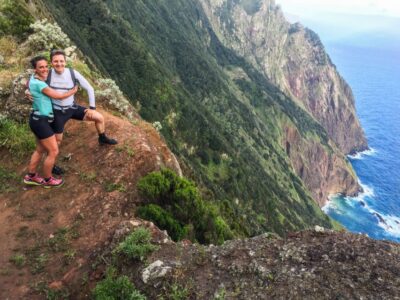
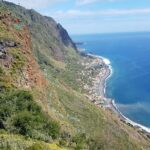
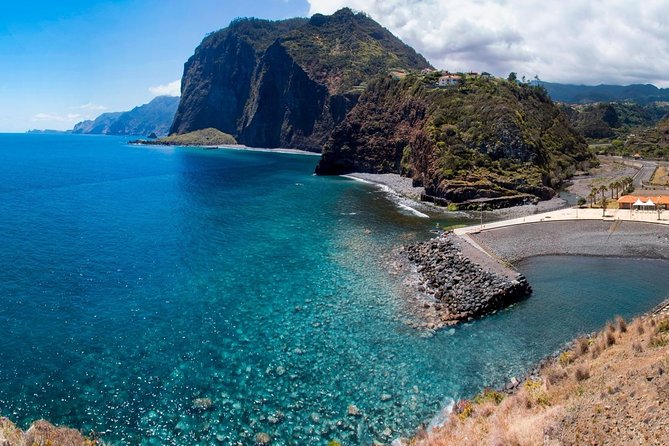
You begin at Cabo Girão, a towering cliff viewpoint around 580 meters above the sea, famous for its glass balcony. The visit is short, and the biggest thing to know is that Cabo Girão admission isn’t included, so you’ll likely pay on site or have a separate ticket. Still, this stop is a strong start because it sets the tone: Madeira is steep, dramatic, and close to the ocean.
If you’re sensitive to heights, go slow around the glass. On good days, the views can be genuinely jaw-dropping; on cloudy days, you’ll at least get a sense of how far the drop-offs go.
Ribeira Brava and Madalena do Mar: villages plus banana country
Next you head down toward Ribeira Brava, where there’s time to see a church dating back to the 15th century. It’s not an all-day historical museum stop—think of it as a quick way to connect Madeira’s coastal towns to their older roots.
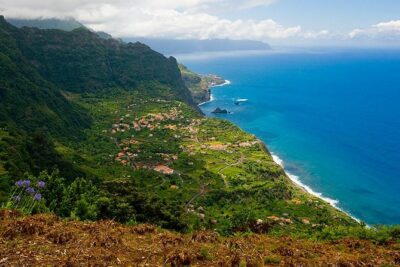
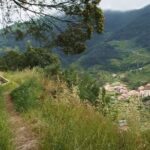
Then comes Madalena do Mar, with a short visit through lush banana plantations. This is one of those stops that feels like a breather: less climbing, more scenery, and a chance to see the island’s working side.
Fonte do Bispo and Paúl de Serra: the levada connection
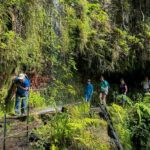
After that, you climb toward the 1300–1500 meter area around Paúl de Serra and Fonte do Bispo. This viewpoint is tied to the levadas—Madeira’s famous irrigation routes—and the idea here is to show you where those walking corridors begin through the Laurissilva forest area.
You won’t be hiking all day, but you’ll get the “map in your head” that makes it easier to choose trails later on your own.



Porto Moniz: natural volcanic pools and a real lunch pause
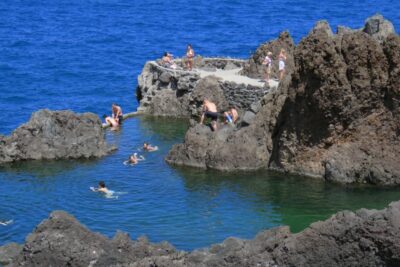
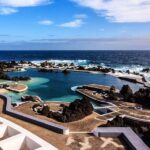
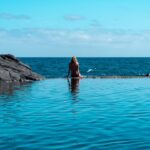
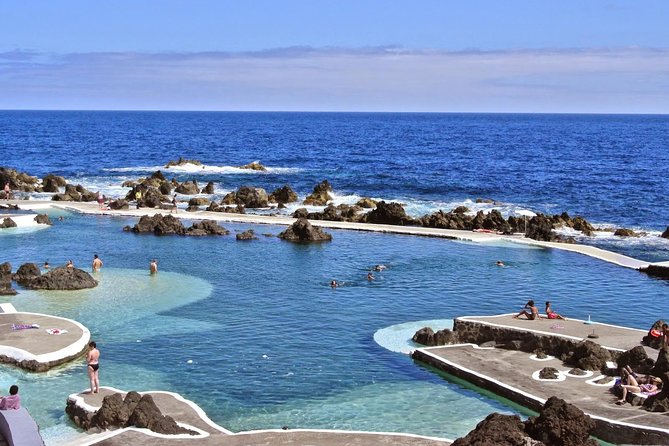
The big coastal payoff on Day 1 is Porto Moniz, known for the island’s largest volcanic natural pools. You’ll get around 1.30 to 2 hours of lunch/free time, and you’ll also have views descending toward the town, where you can often see the pools from above.
A practical tip: bring something you can swim in if the weather is cooperative. If you can’t swim, just watching how the pools sit against the rocks is still a good use of time.
Seixal and Véu de Noiva: quick waterfall viewing
You’ll then stop at Seixal near the famous Véu de Noiva waterfall. This is another short stop, but it’s chosen for a reason: you get that clear sense of how water cuts through the island over long periods—especially when you can see the waterfall flowing well.
São Vicente and Câmara de Lobos: church time and the Churchill tie-in
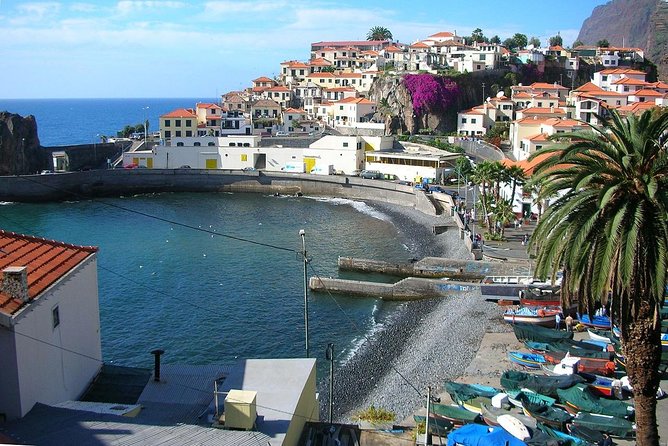
Day 1 finishes with a stop in São Vicente, including time by a 17th-century church, before returning to Funchal. The final stop is Câmara de Lobos, the fishing village about 5 km from Funchal, known for its scenic harbour views and the connection to Winston Churchill, who painted the place.
This end-of-day rhythm matters. By the time you reach Câmara de Lobos, you’ve had enough long driving segments and cliffs that a slower village stop feels like a treat.
Day 2: Cristo Rei, Machico, Ponta de São Lourenço, Santana, and Pico do Arieiro
Day 2 is where you get the more eastern and north-facing nature drama—more ocean horizon, more rock shapes, and two “wow” points at very different altitudes.
Garajau’s Cristo Rei statue: the east coast icon
You start with Cristo Rei in Garajau, an emblematic monument and a classic east-coast photo stop. You’re there long enough to take in the view from the setting, but not so long that the day drifts. It’s a good warm-up before the coast gets wilder.
Machico: Madeira’s early capital roots
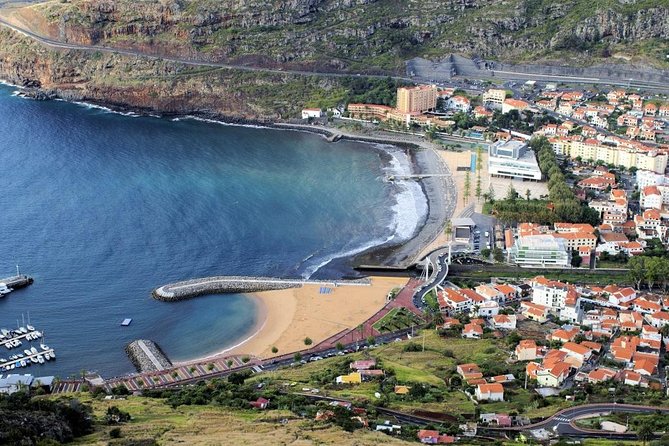
Then comes Machico, described as a historic city and the island’s second most populous area. You get a quick look with context on why it mattered—Machico was Madeira’s first capital between 1440 and 1496, when Funchal was still developing. It’s a short visit, but it adds a human timeline to everything you’re seeing.
Ponta de São Lourenço: the easternmost nature reserve feel
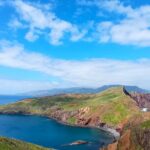
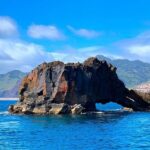
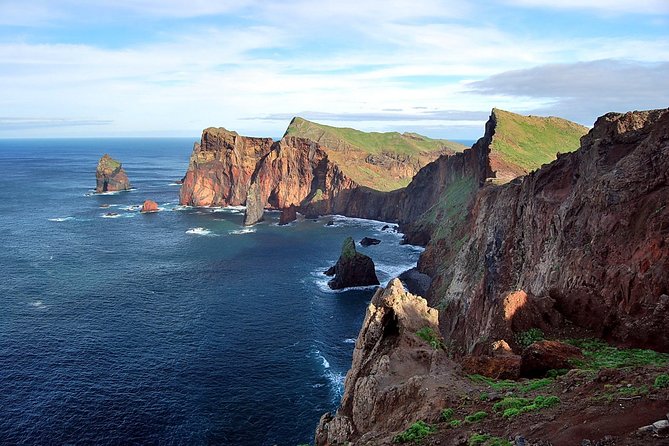
Next is Ponta de São Lourenço (Ponta do Rosto), Madeira’s easternmost point and a nature reserve with rock formations and Atlantic views. This stop is chosen because it looks different from much of the rest of the island—more exposed ocean, more dramatic geology, and fewer town distractions.
If your schedule is tight and you want “one of those places that feels truly Madeira,” this is it.
Porto da Cruz and the rum distillery history
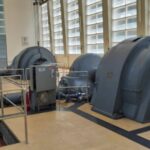
You’ll then pass through Porto da Cruz, where there’s a rum distillery and old steam equipment tied to the island’s sugar-cane past. The door-opening detail here is that you can enter freely—so you can spend a bit of time without needing a separate guided museum ticket.
Even if rum isn’t your thing, it’s a helpful reminder that Madeira isn’t only viewpoints. It’s also production, labour, and local industry.
Santana: triangular thatched houses plus lunch/free time
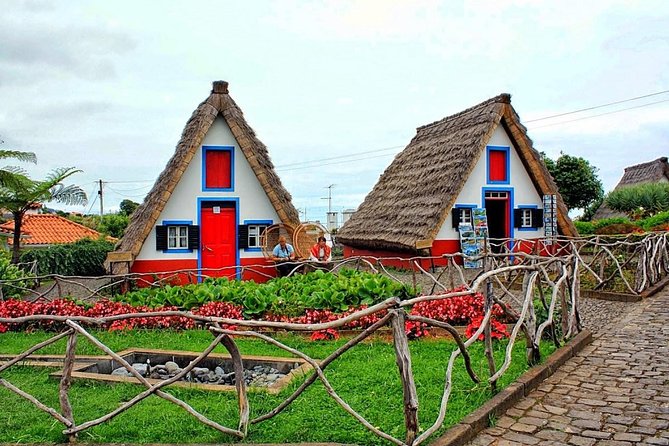
Santana is one of the island’s most recognizable villages, especially for its colorful triangular thatched houses. You’ll get time for lunch/free time—around 1.30 to 2 hours—so this is a good place to eat and reset before the mountains.
This is also where the tour shifts a bit from quick “stop and look” to “wander a little” energy. Short visits can still feel fulfilling when there’s room to breathe.
Ribeiro Frio: trout pools and an easy walking break
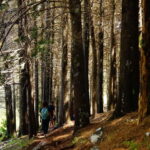
Then you reach Ribeiro Frio, in a deep valley north of the island. The standout detail is the trout farming pools and the presence of nature trails that are made for an unhurried stroll.
This stop is ideal if you want a lighter pace after day-long driving—just don’t expect a long hike.
Pico do Arieiro: the high point with big cloud drama
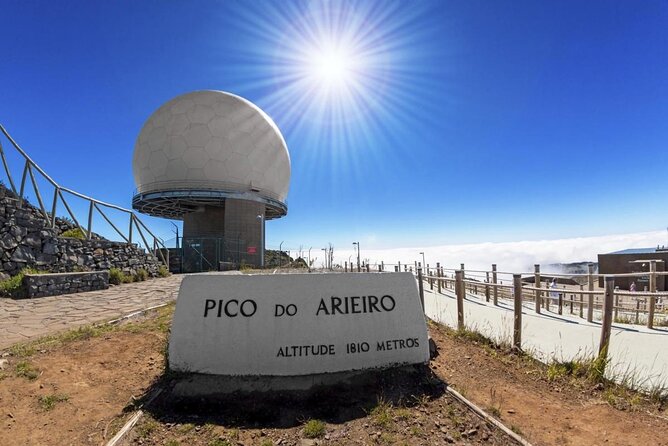
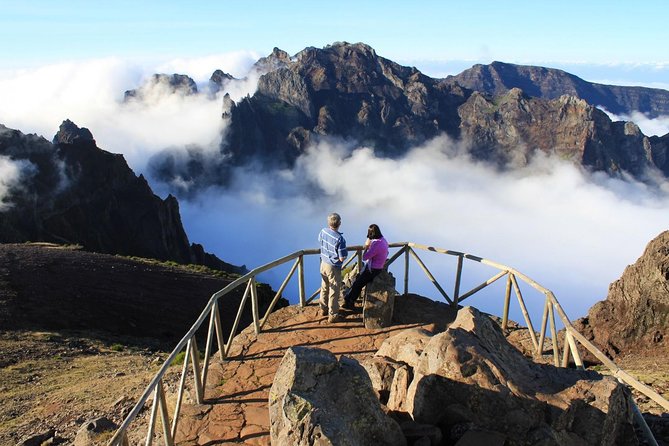
Day 2 ends at Pico do Arieiro, the third highest peak on Madeira at 1818 meters. The views can be spectacular, including cloud layers and even sightlines toward the south coast and Porto Santo if the sky clears. Along the route you may also see “Poço da Neve,” a stone well used to store ice, snow, and hail built by an English family.
This is one of the best places to feel how quickly Madeira changes with altitude. It’s also the most weather-dependent stop, so bring layers even if the morning is warm.
What makes the itinerary work (and where it can feel rushed)
This tour works because it builds a mental map of Madeira in two days. You get cliffs and ocean (Cabo Girão, Véu de Noiva, Ponta de São Lourenço), working land (banana plantation area), and cultural anchors (churches, Santana’s houses, Machico’s early capital story). With a max of 16 people, your guide can actually manage the group at viewpoints instead of just herding people like luggage.
The tradeoff is pacing. Stops are intentionally short to keep the route full, and a few places may feel like “see it, photo it, move on.” One review complaint focused on having less time for pictures versus lunch time, so if photography is your top priority, assume you’ll sometimes want a few more minutes at the viewpoint.
Another practical thing: the tour is not designed as a long hiking experience. You’ll see the levada region from viewpoints and get context, but it’s still a sightseeing tour with short breaks.
Packing tips that actually match the roads and heights
Madeira’s weather can switch fast, and your highest stops are in the mountains. I’d pack for cool air and wind at altitude, even if you start the day in short sleeves.
Here’s what you should plan around:
- Bring extra layers for the mountains (it’s a common “I’m glad I packed this” moment).
- If you get motion sick on winding roads, sit more toward the front—there’s specific advice from past guests to do this.
- On the Porto Moniz day, consider bringing a swim costume in case conditions allow a quick dip in the natural pools.
- Keep small personal items accessible. One issue raised was that there weren’t small bags for anyone who felt sick, so if you’re prone to nausea, be proactive.
Also, be ready for microphones. A couple of reviews complained about guides using microphones a lot, so if you’re noise-sensitive, know that you may be listening for most of the day.
Guides: what the best days feel like
The biggest “quality variable” here is your guide. The tour has a track record of strong personalities and strong storytelling—names that came up repeatedly include Lionel, Renato, Gloria, Paulo/Leonel, and Luís.
One standout pattern from reviews: guides who keep the group engaged with humor and clear explanations, and who can even switch between languages (English and Spanish) so everyone follows comfortably. You shouldn’t expect every day to feel identical, but you can reasonably hope for energetic, local perspective.
If you care about real-world texture—what locals do, what certain plants are called, why a viewpoint is placed where it is—this tour tends to deliver because the guides aren’t just reading facts. They’re pointing out what to notice.
Price and value: how $72.56 fits a two-day highlights plan
At $72.56 per person for roughly two days (9am–5pm each day), this is priced like a budget-friendly way to cover a lot of Madeira without renting a car. The real value is in the logistics: pickup and a full routing plan get you out to high-impact stops that would be hard to string together efficiently on your own.
What’s not included is Cabo Girão admission. Most other stops listed are free, but you should still budget a little for the one paid viewpoint and for your lunches (Porto Moniz and Santana both involve lunch/free time where you’ll likely spend money on food).
If your alternative is a rental car, you’re saving time on navigation and parking stress. If your alternative is solo bus hopping, you’re buying back your vacation hours.
Is the Fanal Forest choice a deal-breaker?
One disappointment that came up is not going through Fanal Forest, which some other operators include. The tour doesn’t do that, but you may still get a nearby viewpoint option rather than a direct forest pass.
So here’s the honest way to judge it: if Fanal is your top “must-see,” this might not be your best match. If you’re aiming for broad island highlights—coasts, peaks, and classic villages—skipping Fanal likely won’t ruin your trip.
Who should book this tour
You’ll probably love it if:
- You’re staying in Funchal and want east + west Madeira in two days
- You don’t want to plan routes or worry about driving
- You enjoy viewpoints, short cultural stops, and guided interpretation
You might look elsewhere if:
- You want long hikes or a forest day
- You strongly dislike crowds or long hours on the bus
- You’re highly sensitive to motion sickness and can’t manage it with seat choice and preparation
- You’re a serious photographer who needs extra time at fewer stops
Should you book Around The Island? My take
I’d book this if you want a fast, organized way to understand Madeira. The route hits the big highlights—Cabo Girão, Porto Moniz, Véu de Noiva, Ponta de São Lourenço, Santana, and Pico do Arieiro—and it’s built for people who want to see more than just Funchal.
If you’re the kind of traveler who plans around weather, carries layers, and treats the tour as a way to build your own follow-up day plans, this makes a lot of sense. If you’re chasing one specific spot like Fanal Forest or you want lots of quiet, slow time, you might find the pacing and inclusions a little too “highlights-first.”
FAQ
What time does the tour start?
The tour starts at 9:00am both days.
Where is pickup available?
Pickup is available from Funchal city centre and main tourist areas. There is also pickup from hotels in Caniço de Baixo and Garajau for a minimum of two people. If your accommodation is not in those areas, you’ll be directed to the nearest meeting point in Funchal.
Is the tour in English?
Yes, the tour is offered in English.
How long are the days?
Each day runs from about 9am to 5pm, and the full experience is described as 2 days.
Do I need to pay for entrance tickets?
Most stops are listed as free, but Cabo Girão notes that admission tickets are not included.
What is the group size and max number of travelers?
The tour has a maximum of 16 travelers.