REVIEW · FUNCHAL
All Madeira In 2 Days Tour
Book on Viator →Operated by Feeling Madeira - Tours & Walks · Bookable on Viator
Two days and you see the whole island. This Madeira loop out of Funchal strings together cliff viewpoints, coastal villages, and mountain passes with pickup from Funchal and a max of 15 people.
I love the way it balances classic photo stops with real time to look around, including Porto Moniz natural swimming pools. Most of the main stops are free, which helps a lot when you’re paying for two busy days.
One thing to watch: this is a full schedule. If you hit mist on the high viewpoints (it happens), you’ll want to accept plan B views instead of perfect panoramas.
In This Review
- Key highlights worth knowing
- A 2-day Madeira sampler: what you get for $72.41
- Day 1 West Madeira: Câmara de Lobos to Ribera Brava
- Encumeada pass (PR12): the mountain road with big payoff
- Porto Moniz natural pools and Veu da Noiva
- São Vicente’s chapel-in-a-boulder stop
- Day 2: Pico do Arieiro and the north-to-east contrast
- Fortress of Faial: a tight stop with a view mission
- Santana’s triangular thatched houses (the long stop)
- Ponta de São Lourenço and Machico’s 1419 arrival
- Cristo Rei of Garajau: the east-coast monument stop
- Getting picked up, kept on time: practical logistics that matter
- Entrance fees: what’s included and what’s not
- Guides are the secret sauce: personalities vary
- Tips to make the 2 days feel worth it
- Who should book this tour (and who might feel cramped)
- Should you book All Madeira in 2 Days?
- FAQ
- What’s the meeting time for All Madeira in 2 Days?
- Is pickup included, and where does it happen?
- How much does the tour cost?
- What language is the tour offered in?
- About how long is the tour?
- Are entrance tickets included for every stop?
- How big is the group?
- Is the tour cancellable for free?
- Is it suitable for most people, and can service animals join?
Key highlights worth knowing
- Small group size (up to 15): you’re not lost in a crowd, and the driver has room to run the route smoothly.
- West + East in one go: you get a real feel for Madeira’s north ruggedness and the south/east sunshine.
- Porto Moniz swim time: the north-coast volcanic pools are built for relaxing, not just photos.
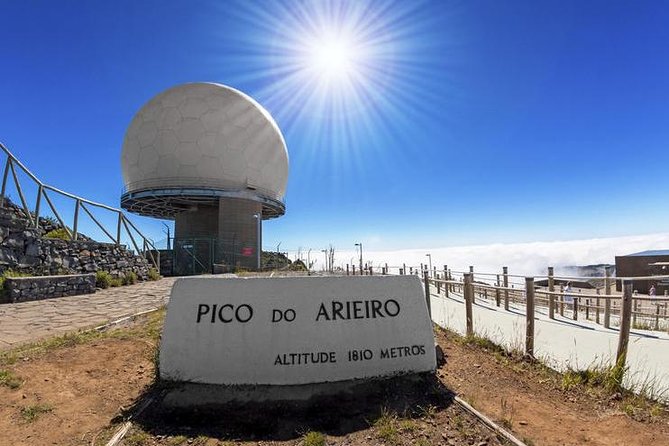
- Pico do Arieiro’s big-altitude views: third-highest peak on Madeira, with a shot at seeing Porto Santo when weather plays nice.
- Two paid upgrades only: Cabo Girão and Cristo Rei at Garajau are the main extra-ticket items mentioned.
A 2-day Madeira sampler: what you get for $72.41
For $72.41 per person, this tour is aiming at one goal: help you see most of the island without driving. And on Madeira, that matters. Roads can be winding, pullouts can be tight, and weather shifts fast. Doing the island by organized route means you trade navigation stress for scenery.
This is also good value because a large chunk of the stops don’t require paid entry. You’re not constantly scanning a ticket line. Plus, with pickup in Funchal city centre and the main tourist areas, you can start the day already seated instead of juggling buses and taxis.
The tradeoff is that it’s two days packed with stop-and-go time. This works best if you want breadth—west coast highlights one day, east coast plus mountain highlights the next.
You can also read our reviews of more tours and experiences in Funchal
Day 1 West Madeira: Câmara de Lobos to Ribera Brava
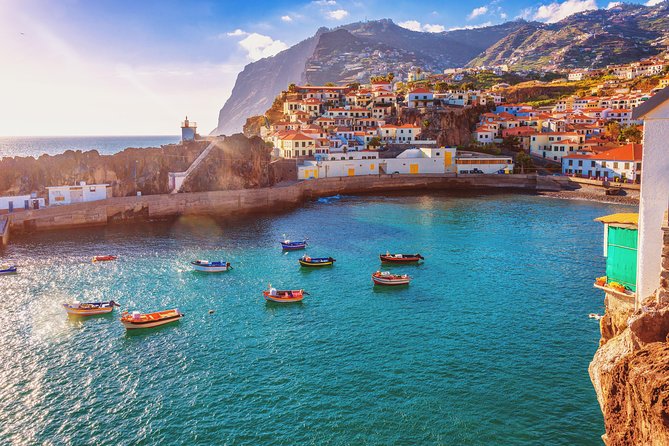
Day 1 begins with Câmara de Lobos, a traditional fishing village just about five kilometers from Funchal. This is one of those places where art and tourism meet in a natural way: its harbor and surrounding hills were what inspired Sir Winston Churchill to paint the area. The stop is short (around 30 minutes), but it’s long enough to enjoy the waterfront mood and grab photos before the road pulls you onward.
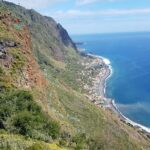
Next comes Cabo Girão, one of the island’s headline viewpoints. It’s often described as the highest sea cliff in Europe, and the glass skywalk is the star. Plan for about 30 minutes here, and plan for the fact that entry is not included. If you’re afraid of heights, this is the moment to decide whether the skywalk is worth it for you.
From there, you’ll head to Ribeira Brava Beach on Madeira’s southwest coast. Even though the stop is about 30 minutes, the name tells you the vibe: Ribeira Brava means wild stream. You’re not going for long beach time; you’re looking at the way the coast has carved itself into Madeira’s identity.
Encumeada pass (PR12): the mountain road with big payoff
The route then climbs toward Caminho Real da Encumeada (PR12), a road crossing the 1004 m high Encumeada pass. Starting at Ribeira Brava on the south coast, it winds up toward Serra d’Água. Here’s the detail that makes it more than just a drive: Serra d’Água was the island’s first water power station, so the pass connects you to both the landscape and the island’s practical history.
You’ll get around 30 minutes at the top/valley viewpoints. This is where I’d slow down. It’s easy to rush because the bus is waiting, but you’ll want a good look both toward the south coast and toward the north side—Madeira’s two moods in one glance.
Porto Moniz natural pools and Veu da Noiva
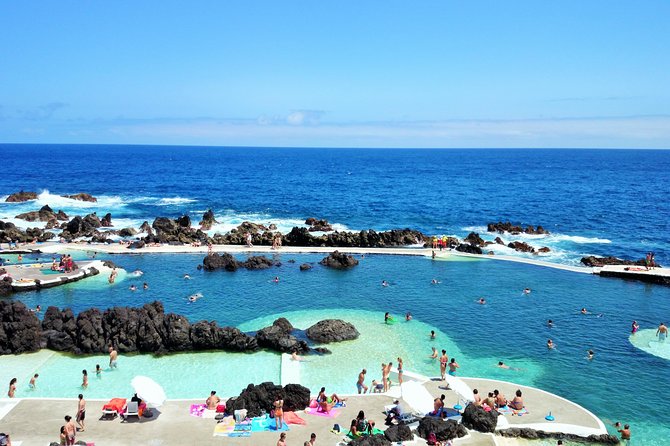
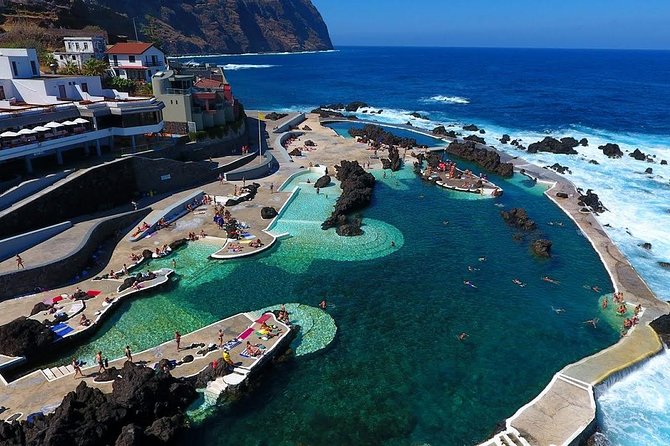
Then you reach the north coast, where the pace shifts. Porto Moniz Natural Swimming Pools are next, with about two hours on the ground. The pools are volcanic and sit in a dramatic coastal setting. This stop is one of the best on the entire two days because it’s the only place where you can actually linger with the sea.
After Porto Moniz, you go to Miradouro do Véu da Noiva (in Seixal). This viewpoint area links to a few practical interests:
- It’s in Seixal, noted as the largest parish of Porto Moniz municipality by area.
- The area includes a trout farm in Chão da Ribeira.
- You can also see Santo Antão Church.
And yes, swimming is part of the offering here too, with volcanic natural pools and sea/mountain views. The time is shorter (about 20 minutes), so if you want water time, bring what you need quickly and avoid overpacking.
São Vicente’s chapel-in-a-boulder stop
Day 1 wraps with São Vicente, a coastal village that has also developed more sheltered inland over time. The stop is about 30 minutes, but it’s built around one very specific sight: a big boulder near the sea with the Saint Vincent chapel built into it. It’s a weird, wonderful Madeira detail. Not just scenery—an actual structure carved into the island’s geology.



Day 2: Pico do Arieiro and the north-to-east contrast
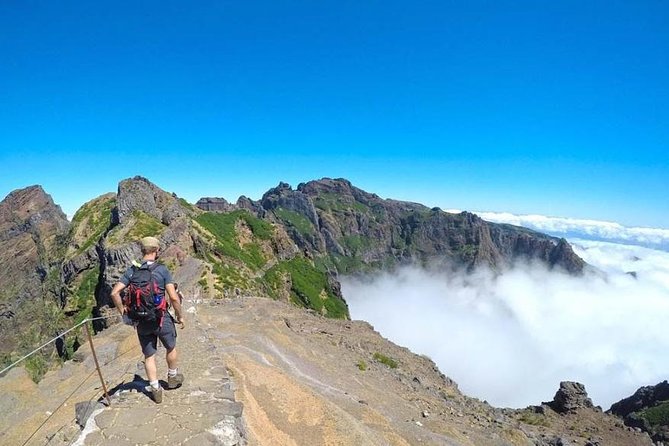
Day 2 starts with Pico do Arieiro at 1818 meters. It’s Madeira’s third highest peak and the second highest with pedestrian access. The nice part: you can reach it by car, which matters because it keeps your time on-site focused on views rather than extra trekking.
You get about 30 minutes here. The big payoff is weather-dependent. On clear days, you can even see Porto Santo—around 30 nautical miles away. On misty days, it becomes a different kind of experience: the drive up and the climb back down can still feel epic, but you may not get the full panorama. It’s smart to dress for cool and damp conditions even in summer.
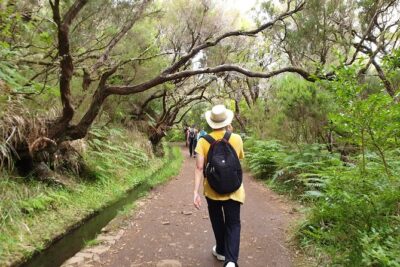
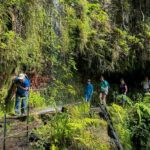
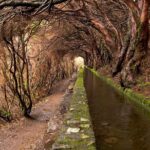
Next is Ribeiro Frio on the northern slopes, also about 30 minutes. This is a popular starting point for levada walks, and it’s named for the cold river. The stop connects you to Madeira’s natural legacy: the Laurissilva forest once covered the island, and this area still holds original vegetation. You’re not doing a full hike with this stop, but it gives you the starting-point atmosphere that makes levadas feel like a Madeira tradition rather than just a trail label.
Fortress of Faial: a tight stop with a view mission
You’ll then go to Fortress of Faial. Expect around 30 minutes. The value here is the positioning: it’s at the east point, giving views across both the bold north coast and the sunnier south coast. It’s a short stop, but it helps you connect the dots between Day 1’s north ruggedness and Day 2’s east-facing viewpoints.
Santana’s triangular thatched houses (the long stop)
After that, it’s time for Santana, on Madeira’s north coast. Santana is known for small triangular houses with thatched roofs. These weren’t built for display only; they served as stables and dwellings for locals over centuries. The stop here is about two hours, which is noticeably longer than most other points.
This is your best chance to slow down without rushing. If you like architecture, this is where you can actually look closely at form and materials rather than treating everything like a photo sprint.
Ponta de São Lourenço and Machico’s 1419 arrival
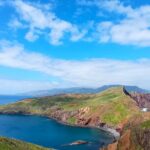
From Santana, the tour heads to Ponta de São Lourenço in the eastern part of Madeira. This is described as one of the last nearly untouched places on the island, built from rock, sea, and nature that create dramatic coastal scenes. You’ll have about 30 minutes.
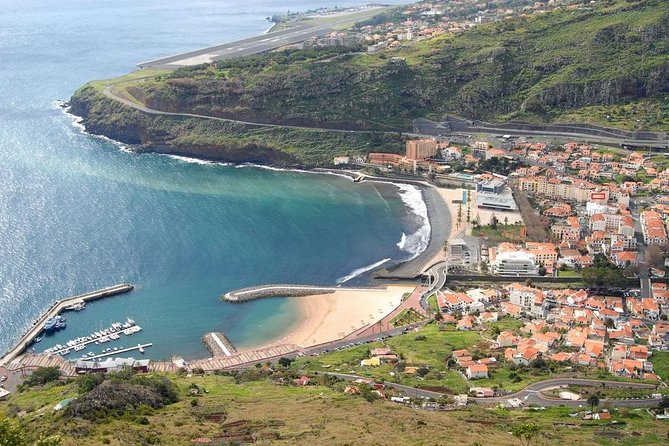
Then you finish Day 2 with Machico, one of Madeira’s more populated areas but also deeply tied to the island’s early exploration story. The key detail here is 1419, when explorers first arrived. The stop is about 30 minutes, enough time to take in the town atmosphere and the historical weight without turning it into a museum visit.
Cristo Rei of Garajau: the east-coast monument stop
The last stop is Miradouro do Cristo Rei do Garajau, with about 20 minutes on-site. The statue of Cristo Rei here is one of the most emblematic monuments on Madeira’s east coast, and the viewpoint setting is part of the appeal. Entry is not included, so you’ll want to have a little extra budget ready for this final ticket.
Getting picked up, kept on time: practical logistics that matter
This tour runs from 9:00 am with pickup options from Funchal city centre and the main tourist area. There’s also pickup for hotels in Caniço de Baixo and Garajau, but it requires a minimum of two people. If your lodging is outside those zones, you’ll be directed to the nearest meeting point in Funchal.
Two practical things I’d plan for:
- Pickup timing can vary with how many people are collected. In peak season, you might ride in a larger transport setup (like a coach) with more waiting time.
- The group is small (max 15), but language mixing can still happen. If you strongly prefer one language, pay attention to what group composition looks like on the day.
A mobile ticket is part of the package, so you’ll want your phone charged and ready.
Entrance fees: what’s included and what’s not
The tour lists most major stops as free, which is great for predictability. The two items specifically flagged as not included are:
- Cabo Girão (glass skywalk viewpoint)
- Miradouro do Cristo Rei do Garajau (Cristo Rei viewpoint/entry)
Everything else on the route is marked as free entry in the schedule you’ll follow.
One more reality check: some stops can have closures or limited access at certain times. If something you hoped to see is unavailable, your guide should help you adjust on the spot.
Guides are the secret sauce: personalities vary
The biggest difference between a good day and a great day here is the guide. In the best versions of this tour, you get smooth driving plus storytelling that explains what you’re seeing while you move between stops.
I saw a pattern in praised guides: people like Lionel / Leonel, Renato, Paulo, José, and Sérgio were called out for being engaging, friendly, and safe on the road. Others were praised for humor and respectful explanations, and one guide was described as very good at narration during the drive.
There’s also a caution that matters: if you end up with a guide whose energy is lower on one day, the same route can feel shorter or more routine. The stops stay the same, but the tone doesn’t always.
Tips to make the 2 days feel worth it
Here’s how I’d make this tour work smoothly for your body and your photos:
- Pack a layer for the higher points, especially Pico do Arieiro. Mist and cool air can change your comfort fast.
- If you want to swim at Porto Moniz and the Véu da Noiva pools, bring swim gear and a way to dry off quickly. Those are some of the few stops where water time is a real option.
- Bring sun protection. Madeira’s stronger light can hit even when the weather feels changeable.
- Arrive on time for pickup and be ready at the curb. A tight pickup window makes the whole route run better.
- If you’re sensitive to timing changes, remember it’s a road trip first. You’re trading independence for less planning.
Who should book this tour (and who might feel cramped)
This is a strong choice if you:
- don’t want to rent a car
- have limited time in Madeira and want both west and east
- like a mix of viewpoints plus a couple of “stop and stay” moments (Santana and Porto Moniz)
It may feel less ideal if you:
- want long hikes or lots of time in one area
- hate weather uncertainty at high-altitude viewpoints
- prefer exact, perfectly predictable timing without any shuffle for pickup
Should you book All Madeira in 2 Days?
If your goal is to get your bearings fast and see Madeira’s big highlights across the island in two days, I’d say yes. The value comes from the mix: classic coastal villages, cliff and pass viewpoints, volcanic pool time, and the east coast’s key monuments and historic town.
If you’re the type who wants deep exploration, slow streets, or long detours off-route, you may feel rushed. But for a first visit—or for a short trip where you want max coverage with minimal driving—this tour makes a lot of sense.
FAQ
What’s the meeting time for All Madeira in 2 Days?
The tour starts at 9:00 am.
Is pickup included, and where does it happen?
Pickup is offered from Funchal city centre and the main tourist area. Pickup is also available from hotels in Caniço de Baixo and Garajau for a minimum of two people. If you’re outside those areas, you’ll be directed to the nearest meeting point in Funchal.
How much does the tour cost?
The price is $72.41 per person.
What language is the tour offered in?
The tour is offered in English.
About how long is the tour?
The duration is listed as 2 days (approx.).
Are entrance tickets included for every stop?
Most stops are free, but Cabo Girão and the Miradouro do Cristo Rei do Garajau are marked as not included for admission.
How big is the group?
This tour has a maximum of 15 travelers.
Is the tour cancellable for free?
Yes. You can cancel up to 24 hours in advance for a full refund.
Is it suitable for most people, and can service animals join?
The tour notes that most travelers can participate, and service animals are allowed.