REVIEW · FUNCHAL
Madeira Funchal:East Tour Pico Arieiro & Santana&Laurissilva
Book on GetYourGuide →Operated by Icon Travel Madeira · Bookable on GetYourGuide
Madeira’s east side hits you with variety in one long day. You start in pilgrimage-sized monuments, then move to high cliffs at Pico do Arieiro, and finish with coastal drama along the north and east. It’s the kind of route that feels like you changed movies halfway through.
Two things I really like: the small group style (I’ve seen groups of about 4 to 8), and the way guides like Bruna, Pedro, and Jose keep the day moving without turning it into a sprint. One thing to consider: it’s a 7-hour day with a short walk to Balcões, so if you’re tight on mobility or you hate getting in and out of the van, you’ll want to pace yourself.
In This Review
- Key Highlights Worth Fixing in Your Mind
- Terreiro da Luta and the Senhora da Paz Sanctuary: Start With Meaning
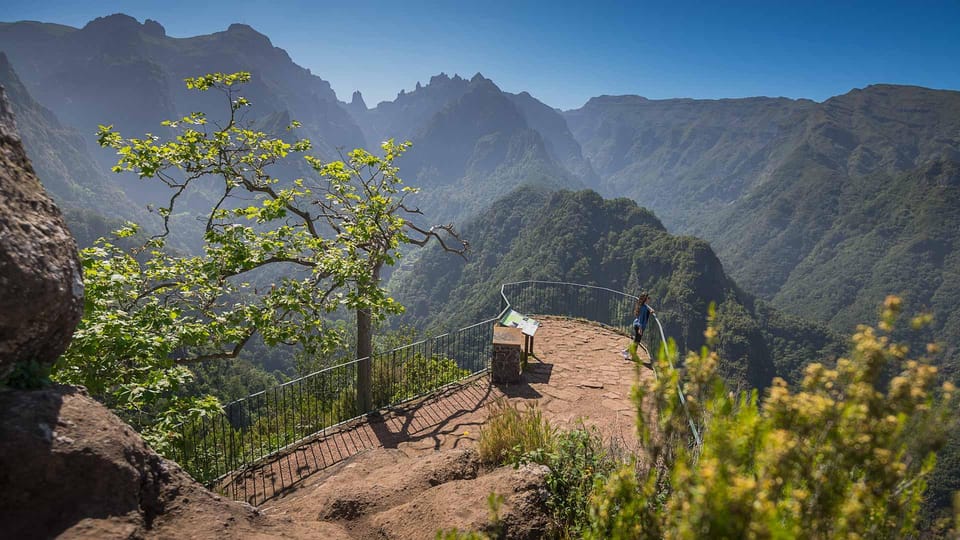
- Pico do Arieiro (1818m): The View That Makes the Drive Worth It
- Ribeiro Frio and Laurissilva: UNESCO Forest Meets a Gentle Levada
- Santana’s Triangular Houses: Where the Island Looks Like It Kept Secrets
- Faial Guindaste Glass Walkways: Ocean-Edge Photos With Teeth
- Porto da Cruz and Engenho do Norte: Sugar History and Sea Promenade Time
- Machico and Pico do Facho: Old Capital With a Sea-Balcony Feel
- Ponta São Lourenço: Rocks, Sea, and That Grand Canyon Feeling
- The Group Size Factor: Why Small Groups Make This Tour Feel Better
- Price and Value: Is $37 Really Fair for 7 Hours?
- What You’ll Be Doing Hour to Hour (Without the Rush)
- Should You Book This East Madeira Day Tour?
- FAQ
- How long is the tour?
- Is pick-up and drop-off included?
- Where do I meet the guide if my place isn’t a hotel?
- Is lunch included?
- Is breakfast included?
- What languages are the live guides available in?
- How much walking is involved?
- Does the tour include photo and coffee stops?
- Is cancellation free?
- Can I reserve and pay later?
Key Highlights Worth Fixing in Your Mind
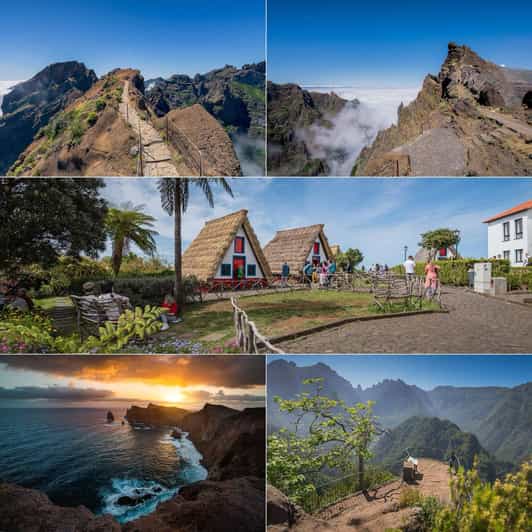
- Pico do Arieiro (1818m) viewpoints with big mountain drama, often used for sunrise watching
- Easy levada walk to Balcões through UNESCO-listed Laurissilva forest, with a short flat route option
- Santana’s classic thatched triangular houses, plus time to grab coffee and photos
- Faial Guindaste glass walkways, two ocean-suspended panels built for skyline-to-sea selfies
- Good photo and coffee stops, plus added time at key viewpoints so you don’t feel rushed
Terreiro da Luta and the Senhora da Paz Sanctuary: Start With Meaning
The day often opens with Terreiro da Luta and the Senhora da Paz Sanctuary area, home to a major island monument dedicated to Nossa Senhora do Monte. This statue stands about five metres tall and is carved in marble, built around a promise made after the 1917 bombing raids on Funchal by German submarines. That’s not trivia for trivia’s sake. It gives you a baseline for why Madeira does ceremonies, devotions, and public art so seriously.
What I like for you: even if you don’t care about monuments, the sanctuary setting helps you understand the island’s identity quickly. Plus, it’s a good warm-up for the rest of the route, because right after this you’ll be in viewpoint mode, camera-ready.
You can also read our reviews of more tours and experiences in Funchal.

Pico do Arieiro (1818m): The View That Makes the Drive Worth It
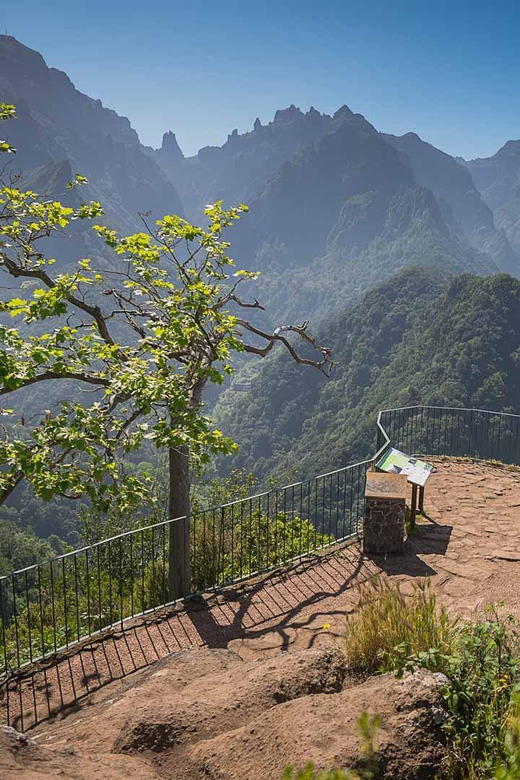
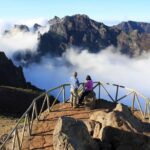
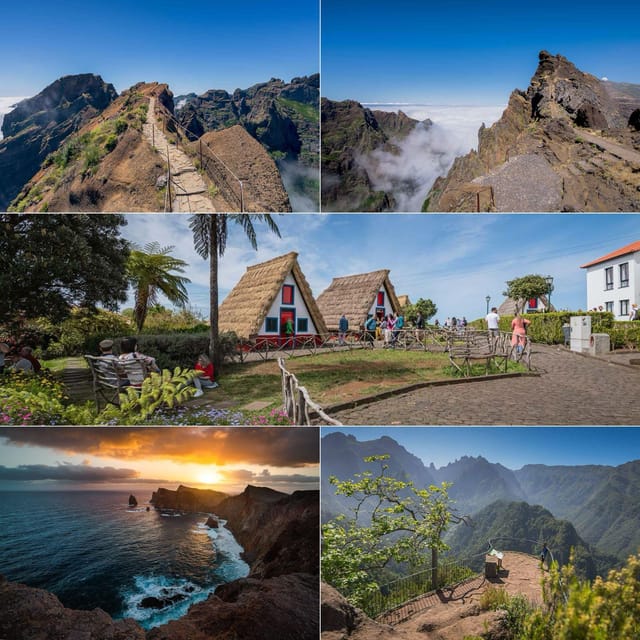
Then you climb to Pico do Arieiro (1818m / 5965 ft), the third-highest peak on Madeira. It’s one of the island’s best-known spots for sunrise watching, which tells you something important: the scenery here is dramatic by design. Expect vast mountain views with a serious sense of altitude, not just a pretty overlook.
Practical note: bring layers. At this elevation you’ll often want something warmer than what feels comfortable near Funchal. And if the weather is clear (and your guide will usually try to time the best moments), you’ll get that crisp, high-contrast panorama that makes Madeira look almost unreal.
Guides such as Pedro and Nelson are repeatedly praised for keeping you informed on the scenery and history, then giving you enough time to actually enjoy it. That extra time matters at Pico do Arieiro—standing around for a few minutes isn’t the same as absorbing the view.
Ribeiro Frio and Laurissilva: UNESCO Forest Meets a Gentle Levada
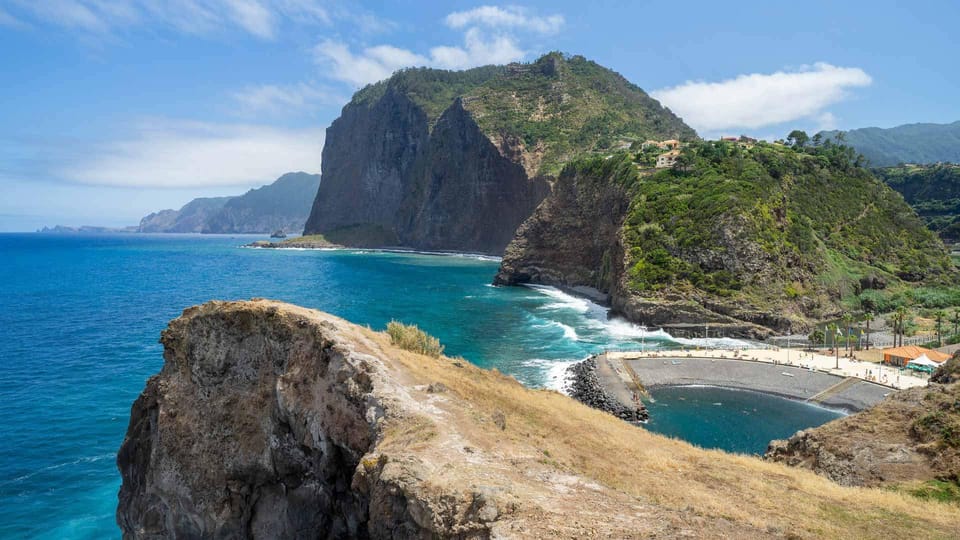
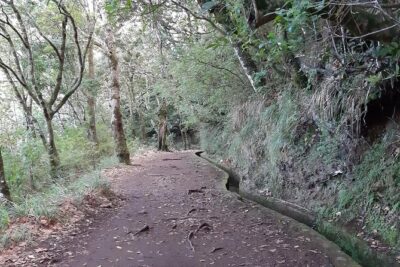
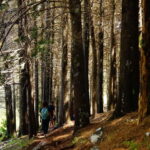
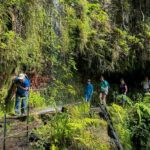
Next up is Ribeiro Frio and the Laurissilva forest. Laurissilva is UNESCO World Heritage (listed in 1999), and it’s a big reason Madeira’s walking trails feel different from typical island hikes. Here the focus is on an easy levada experience—an old irrigation/water-channel walking tradition that also became an access route for nature walks.
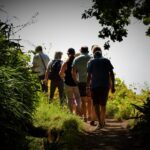
This tour includes a small, easy walk to Balcões. You’re looking at under 20 minutes on foot with an optional flat walk toward the viewpoint area (about 20 minutes easy/flat). It’s a great fit if you want the levada feeling—water in the landscape, shade, forest texture—without committing to a full-day trek.
One practical caution from real-world experience: levada entry can involve QR-style processes. Internet can be patchy near trail access points, which can slow things down. I’d plan for a little patience at the start and keep a backup method handy (like having something to show offline if your phone struggles). Once you’re walking, though, it’s a relaxing payoff.
Santana’s Triangular Houses: Where the Island Looks Like It Kept Secrets
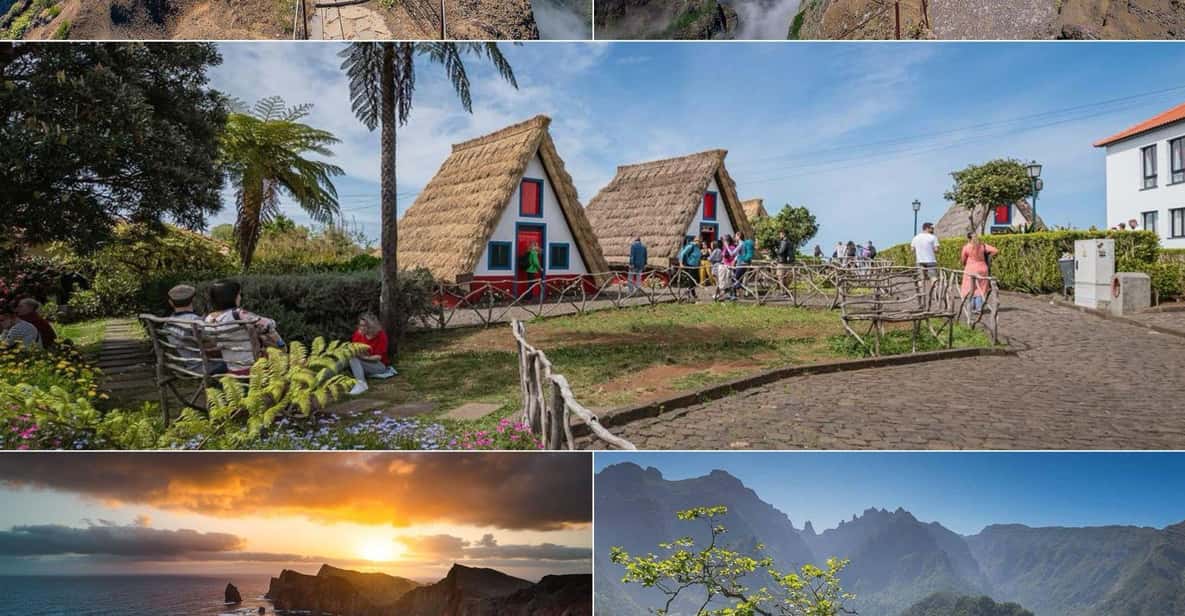
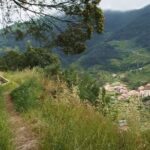
After the forest, the route shifts to Santana, known for its small thatched triangular houses. It’s one of those places where the architecture isn’t just pretty—it’s part of the island’s living story. You’ll also usually have time for a quick look at the village’s church and for a coffee or snack stop.
What works well here for a day tour: Santana gives you a slower pace after the drive and viewpoint stops. You can wander without a strict timeline, take photos without feeling like you’re in a drive-by, and let your brain reset.
If you’re a first-time visitor to Madeira, this is also where you’ll feel the island isn’t only about cliffs and sea views. Santana reminds you it’s a real community with real streets, even though it looks like a postcard set.
Faial Guindaste Glass Walkways: Ocean-Edge Photos With Teeth
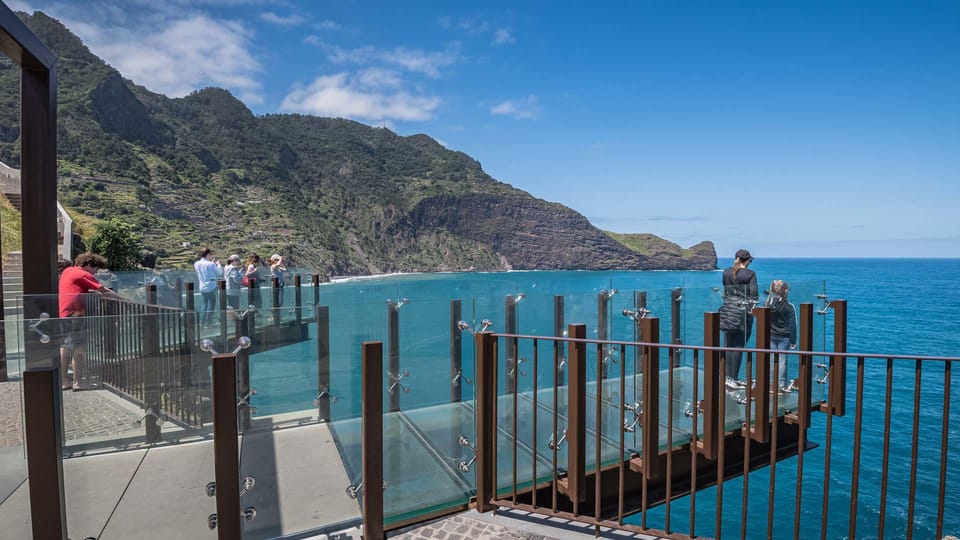
Now for the adrenaline-lite moment: Faial (Guindaste), one of the best viewpoints on the north coast. This is where you’ll see the exciting newer addition—two glass walkways suspended over the ocean. Yes, it’s built for photos. But it’s also genuinely impressive because the ocean is right there underneath you, and the horizon line makes the glass effect feel extra real.
A few tips so you enjoy it instead of bracing for it:
- Take your time at the entrance. People rush and then miss the best angles.
- If you’re afraid of heights, choose your moment. Stand near the start, get your footing, then go as far as you feel comfortable.
- Bring patience for photo-taking—this stop naturally attracts everyone’s camera roll.
Guides are often praised for making photo stops efficient but not rushed. That balance is what you want here, because the walkways are the kind of place where you can lose 10 minutes doing something you didn’t plan (like trying to get one perfect shot).


Porto da Cruz and Engenho do Norte: Sugar History and Sea Promenade Time
Then you swing to Porto da Cruz, a coastal village known for its sea promenade. It’s a nice contrast from the high points: you get sea air, a flatter stroll, and a calmer mood.
Next comes Engenho do Norte, described as a major living testimony of the historical sugar production on the island. This matters because Madeira’s coastline views are only half the story—its industries shaped the way the island grew, traded, and built communities.
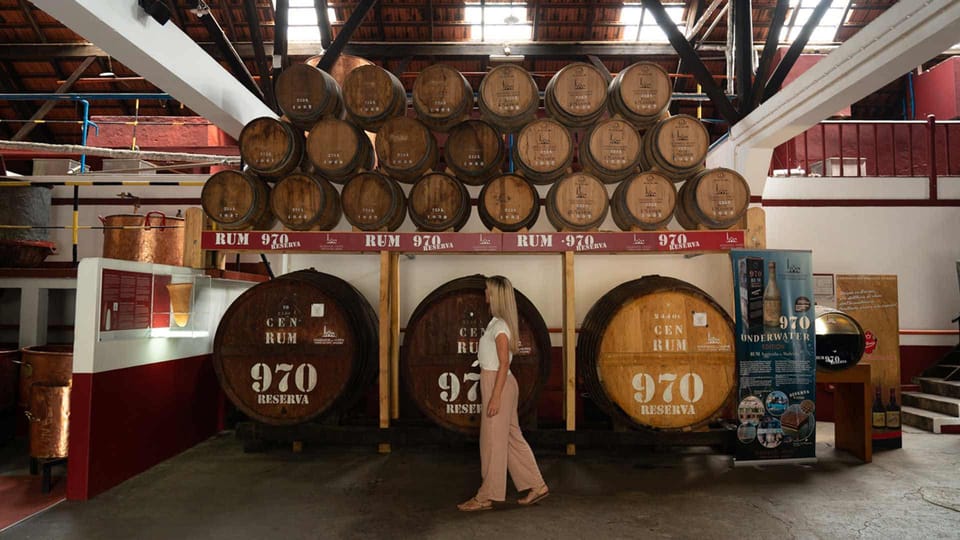
A fun extra: in the day-tour spirit, some stops include tastings. In particular, the Engenho do Norte stop has been described as a rum place with the chance to taste, plus some cookies. Even if you’re not buying anything, it’s a flavorful break from scenery-only tourism.
Machico and Pico do Facho: Old Capital With a Sea-Balcony Feel
The route commonly includes Machico (Pico do Facho). Machico is described as an old capital and the place where Madeira was first landed/discovered in 1419. The viewpoint is said to look like a balcony overlooking both the sea and the mountains—classic Madeira, but with a slightly different energy than Pico do Arieiro.
I like this stop because it gives you historical context without making the day feel like a museum visit. It also helps you connect the dots between why people settled the coast and why the island developed the way it did.
Ponta São Lourenço: Rocks, Sea, and That Grand Canyon Feeling

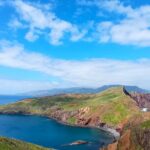
If the conditions line up, the day can include Ponta São Lourenço in the east. It’s described as having a similar climate to Porto Santo and as a wild mix of rocks, sea, and nature. People even liken the scenery to a grand canyon vibe (in the sense of dramatic rock forms meeting ocean views).
This is one of the “stand back and just look” stops. It’s great for photos, but it’s better for absorbing the scale. If you’re the kind of traveler who wants one or two stops that feel truly wild, this is your candidate.
The Group Size Factor: Why Small Groups Make This Tour Feel Better
This is a small-group experience, and that’s not just a marketing line. You’ll see why when you compare how time gets used. A smaller group means:
- easier photo stops without everyone spilling into chaos
- more flexibility if the weather changes
- less waiting around for the slowest passenger to become the whole schedule
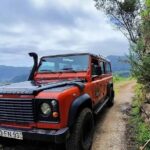
Guides on this route—people like Bruna, Pedro, and others—are repeatedly praised for being punctual, adapting when conditions shift, and keeping the day smooth even on Madeira’s twisty roads.
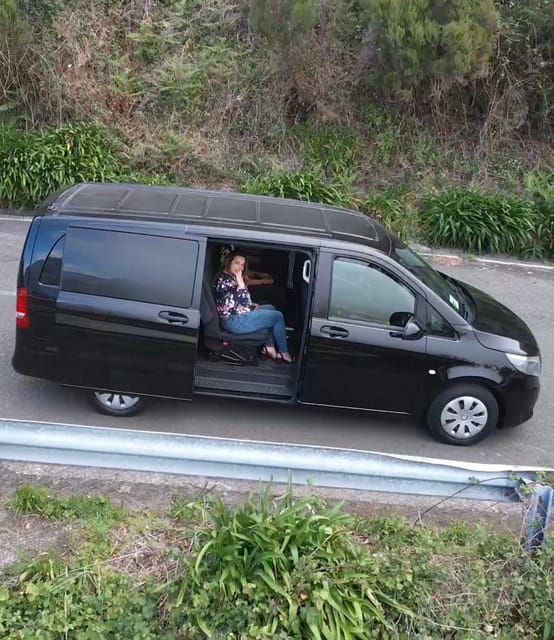
If you’re traveling with a friend or as a couple, this also feels like a semi-private day. One passenger noted a 4-person feel inside the vehicle, which is the kind of comfort you’ll notice.
Price and Value: Is $37 Really Fair for 7 Hours?
At about $37 per person for a 7-hour day with hotel/residence pickup and drop-off in Funchal or Caniço, this sits in the “very solid value” category—especially because you also get a live tour guide in English, Spanish, or Portuguese, plus guided stops for photos and coffee.
What you should weigh:
- You’re paying for route planning, transport, and interpretation at major viewpoints.
- You’re not paying for meals (breakfast and lunch aren’t included), so budget for at least one paid meal or snack.
- The tour includes a short levada walk, not a full trek. If you want long hiking, you’d look elsewhere; if you want highlights with nature, this fits.
For many people, lunch is the main extra cost. The good news: the tour includes a lunch-time slot where there’s an optional lunch spot, and guides often get praised for recommending good places close to where the van is.
What You’ll Be Doing Hour to Hour (Without the Rush)
You can expect a rhythm like this: pickup, drive with planned viewpoint pauses, a quick levada walking window at Balcões, then village and coastal stops that mix architecture, sea views, and factory-history context.
The biggest advantage is pacing. This tour is known for giving a good amount of time at stops, not just the speed-run version of sightseeing. That matters at places like Pico do Arieiro and the Guindaste walkways, where people want time to look, breathe, and take photos at more than one angle.
Also, because it’s a driver-guide or guide-led format, you’ll get commentary during the drives too. Some guides use a microphone so everyone can hear; one passenger did mention it can be harder in the back if audio isn’t properly set up, so if sound matters to you, sit closer to the front or consider bringing earbuds.
Should You Book This East Madeira Day Tour?
If you want an efficient way to see East Madeira’s biggest hits—Pico do Arieiro, levada-to-viewpoint nature, Santana, and the north-coast viewpoint with Guindaste glass walkways—then yes, this is a smart booking. The small-group format and the repeated praise for guides like Bruna, Pedro, Jose, and Nelson suggest you’ll spend your time looking at Madeira, not waiting around.
Book it especially if:
- you’re short on days and want variety in one go
- you like scenery with short walks, not all-day hiking
- you value a guide’s stories and practical tips (restaurant advice, route tweaks, and timing)
Skip it if:
- you want a long, intense hike instead of an easy levada section
- you need lots of free time with no structured stops
- you’re very sensitive to long driving days (it is a full day)
FAQ
How long is the tour?
The tour duration is listed as 7 hours.
Is pick-up and drop-off included?
Yes. Pick-up and drop-off are included for hotels, houses, or residences in any area of Funchal or Caniço.
Where do I meet the guide if my place isn’t a hotel?
If you’re not at a hotel, you’ll wait outside in front of your property door for the guide/vehicle.
Is lunch included?
Lunch is not included in the price. The tour has a lunch-time stop with an optional lunch spot where you can relax.
Is breakfast included?
No. Breakfast payment is not included.
What languages are the live guides available in?
The live tour guide is available in English, Spanish, and Portuguese.
How much walking is involved?
There is a small walk (a levada walk) with an easy level, described as less than 20 minutes.
Does the tour include photo and coffee stops?
Yes. There are stops for photos and coffee.
Is cancellation free?
Free cancellation is available up to 24 hours in advance for a full refund.
Can I reserve and pay later?
Yes. You can reserve now and pay later.