REVIEW · MADEIRA
A Self-Guided Walk Through Funchal’s Historic Heart With a Local
Book on Viator →Operated by VoiceMap Audio Tours · Bookable on Viator
Funchal has layers, and this walk keeps them straight. I like the VoiceMap audio so you can pause whenever you want, and I love that it threads Protestant landmarks with the old-center squares and viewpoints. One catch: you’re following a phone-led route, so if you prefer a live guide and zero screen time, this may feel less satisfying.
You’ll cover the historic heart at an easy walking pace, planning your own stops over about 1 hour 30 minutes to 2 hours. It’s offered in English, and the tour is private, meaning only your group uses the audio route at the same time.
The walk starts at Quinta Vigia and ends around Mercado dos Lavradores (with the tour concluding at Cica Café). It’s a smart way to get oriented fast, especially in a city like Funchal where the streets bend and the best stories hide in plain sight.
In This Review
- Key things that make this walk worth your time
- How a self-guided audio walk fits Funchal’s street maze
- Quinta Vigia: start with calm views before the old streets
- Santa Catarina Park and Manueline chapel details
- Old Protestant Cemetery: a gentle monument with a big backstory
- First Protestant church: how Madeira Wine helped fund faith
- São Pedro and St. Peter’s Church: old streets, careful attention
- Zarco’s statue and Palácio de São Lourenço: founders, fortress, and direction
- Waterfront walk, Praça do Povo, and Praça da Autonomia
- Mercado dos Lavradores and Cica Café: plan your last 30 minutes
- Price and timing: $8.99 that can replace a guided tour
- What I’d bring (and what you should watch for)
- Who this walk suits best (and who should skip it)
- Should you book this Funchal historic walk?
- FAQ
- How much does the tour cost?
- How long is the walk?
- What language is the tour in?
- Where do I start the experience?
- Where does the tour end?
- Is this a private tour?
- When is the tour available?
- Are service animals allowed?
- What is the cancellation policy?
- How far in advance should I book?
Key things that make this walk worth your time
- Voice-led pacing you control: you can linger at viewpoints and skip the parts you’re not feeling.
- Quinta Vigia at the start: official-residence calm with coastline views that set the mood.
- Manueline Santa Catarina Chapel: architecture details you can notice as you walk.
- Protestant sites in Portugal’s oldest Protestant cemetery: an unexpected angle on Madeira’s connections.
- Wave-pattern cobblestones in São Pedro: a signature square you’ll remember.
- Finish at Mercado dos Lavradores: plan your snacks so you don’t rush the end.
How a self-guided audio walk fits Funchal’s street maze
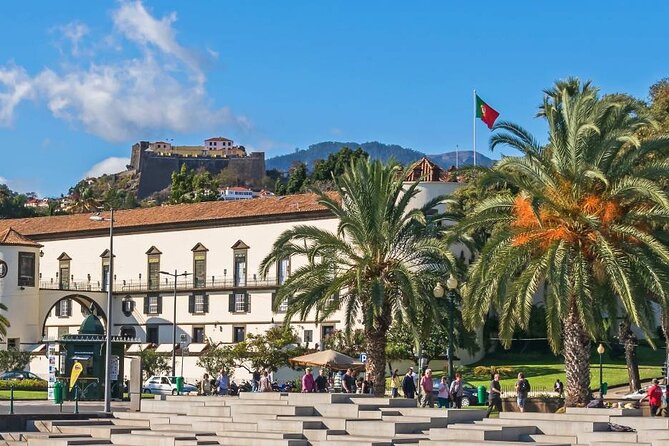
Funchal’s old center is the kind of place where a map helps, but stories help more. This experience is designed to keep you moving from landmark to landmark without forcing you to stick with a stranger’s pace. You hear what to look for next, and you can stop when you want to read, photograph, or just take in the views.
It’s also a practical pick if your group has different walking speeds. With an audio route, nobody has to pretend they’re fine with one fast pace. I like that the duration lands in a sweet spot—long enough to feel like you toured, short enough that you still have energy for lunch or an afternoon plan.
The value is the combination: big-name sites plus quieter corners in between. And it’s private, so you’re not sharing the route with strangers in your ear at the same time. If your ideal day is flexible, this kind of self-guided route works well.
You can also read our reviews of more walking tours in Madeira


Quinta Vigia: start with calm views before the old streets
You begin at Quinta Vigia (Av. do Infante 1, São Martinho), the historic Official Residence of the Regional President. It’s an excellent first stop because it gives you a calm, green “breather” before the historic center gets more dense.
Expect a change in atmosphere as soon as you arrive. Instead of jumping straight into traffic and tight streets, you get a sense of how Madeira’s geography shapes the city—how the coast and the hills work together. The panoramic outlook is a nice way to understand what you’ll be walking through later.
Practical tip: start your audio here at the meeting point, even if you’re only waiting a minute. It helps you set context early, so the rest of the walk feels connected rather than like a checklist.
Santa Catarina Park and Manueline chapel details
Next is Santa Catarina Park, with exotic and endemic flowerbeds. Even if you don’t consider yourself a “garden person,” this is a good stop because it gives your brain a break. Plus, the audio cues push you to look for specific features, not just wander.
From the park, you’ll also focus on Santa Catarina Chapel’s Manueline architecture. This style is all about distinctive stonework and a dramatic look—something you can actually spot as you approach and observe the shape and detailing. The route also notes it as the first chapel erected in Funchal, which adds weight to what might otherwise feel like a quick photo stop.
Drawback to consider: if you’re trying to keep things very tight and fast, gardens can eat time. The good news is you control pacing with audio, so you can give it a proper look without feeling trapped.
Old Protestant Cemetery: a gentle monument with a big backstory
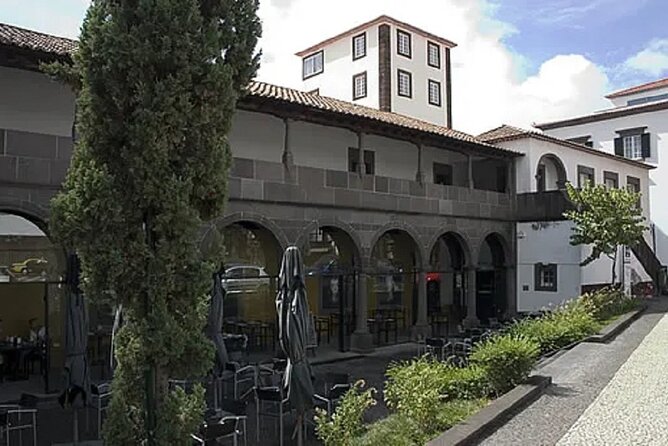
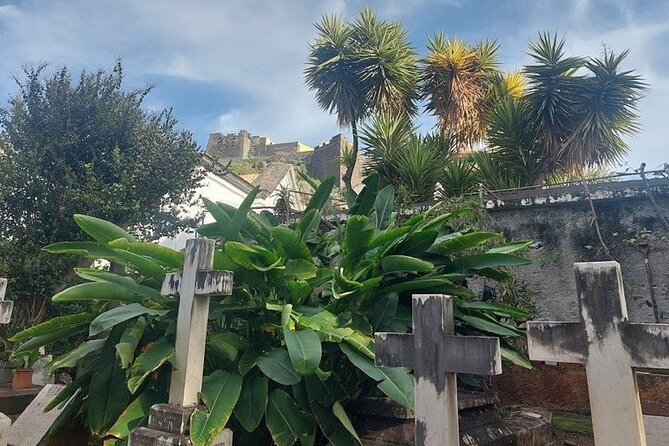
Then comes one of the most moving parts of the walk: the oldest Protestant cemetery in Portugal. It’s described as a pleasant and touching monument to the enduring Anglo-Portuguese alliance, which is exactly the kind of story that helps you see Madeira beyond stereotypes.
This isn’t a loud “attraction.” It’s more like a pause. The audio frames what you’re looking at as part of a wider cultural mosaic, and that makes the site feel like it belongs to Madeira’s real story, not just a stop on a walking route.
Practical note: this kind of cemetery works best if you slow down and keep your voice low. Your best experience comes from taking it in without rushing.
First Protestant church: how Madeira Wine helped fund faith

After the cemetery, you’ll hear about the first Protestant church in Portugal. The walk emphasizes its architectural splendor and notes that it was partially funded through the historic sale of Madeira Wine.
That detail matters because it connects religion to Madeira’s economy and global trade. Madeira Wine isn’t just a souvenir category here—it’s part of how communities were supported and how connections formed. You’ll likely find the story gives the church a deeper meaning than the architecture alone.
If you’re the type who likes turning monuments into understanding, this part is a highlight. The audio helps you read the site as a record of relationships, money, and migration—not just a building.
You can also read our reviews of more guided tours in Madeira



São Pedro and St. Peter’s Church: old streets, careful attention
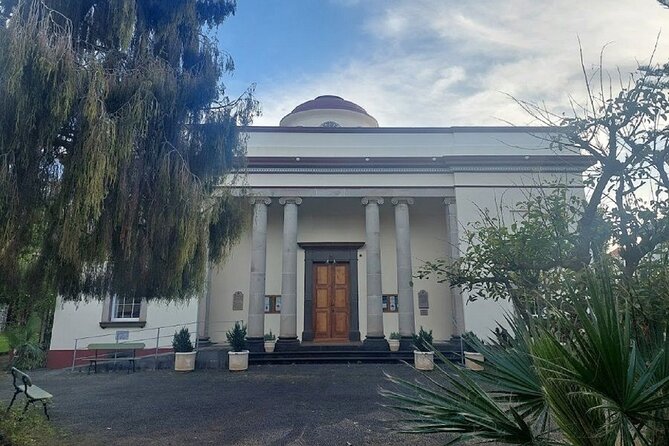
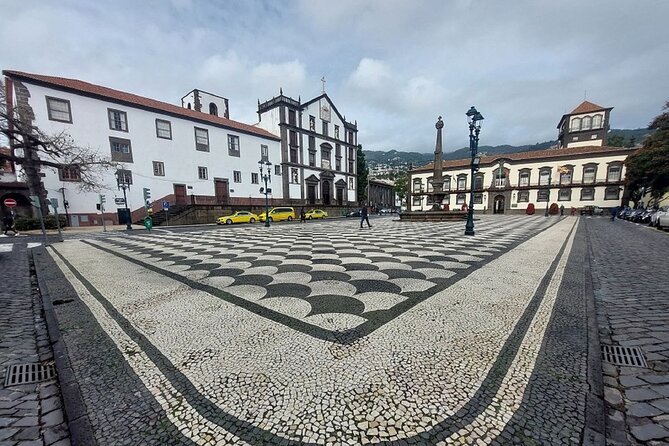
Now you shift into historic São Pedro, home to St. Peter’s Church. This stop is about more than religious significance. The route points you toward artistic and architectural treasures tied to Madeira’s older past.
From here, you’ll also appreciate the style of the square area as you move: Portuguese cobblestone pavement with a wave pattern. This is one of those urban details you can’t fully appreciate until you’re standing on it and looking down. It’s also a great reminder that “small” design choices can define the feel of a place.
The route then places you around St. John the Evangelist Church—a key surrounding monument. You’ll get prompted to notice intricate carvings and gilded interiors. That combination—fine detail outside plus the eye-catching interiors—makes this stop a solid payoff for the walking.
Zarco’s statue and Palácio de São Lourenço: founders, fortress, and direction
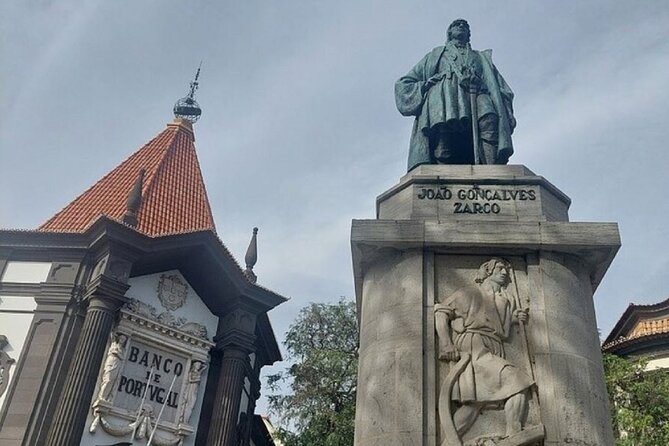
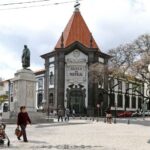
In Funchal’s heart, you’ll meet Zarco, commemorated by a towering statue. The audio connects the story to the settlement of Madeira, noting he revealed Madeira about 600 years ago and that it shaped the island’s destiny.
Even if you’ve read a little about Madeira before, seeing Zarco framed this way helps you understand the city’s center as more than scenery. It becomes a place with intention—built around who arrived, who governed, and what mattered.
Then the route brings you to Palácio de São Lourenço, described as Funchal’s first-ever fortress. That word—fortress—changes how you see the building’s size and presence. Instead of treating it like “another historic structure,” you start reading it as strategic architecture.
If you like your history grounded in physical places, this pair is strong: a personized origin story at Zarco, then the power structure made concrete at the palace.
Waterfront walk, Praça do Povo, and Praça da Autonomia
After the palace area, you’ll stroll along Funchal’s quay. This section is about views and maritime context—how the coastline fits the city’s identity and how Funchal’s seafaring life links to Madeira’s broader story.
From there, the walk heads toward Praça do Povo (People’s Square). This is where the city feels more everyday. It’s a gathering place for locals and visitors, so you get a feel for how the historic core still works for daily life.
Then comes Praça da Autonomia, anchored by the Monument to Autonomy. The audio focuses on the symbol: a woman breaking free. It’s a powerful image, and the route’s framing helps you read the square as a statement of pride and autonomy—not just a statue for quick photos.
Tip: pace yourself here. If you rush, you miss how the streets open up and how the city’s mood changes from landmark-to-landmark.
Mercado dos Lavradores and Cica Café: plan your last 30 minutes
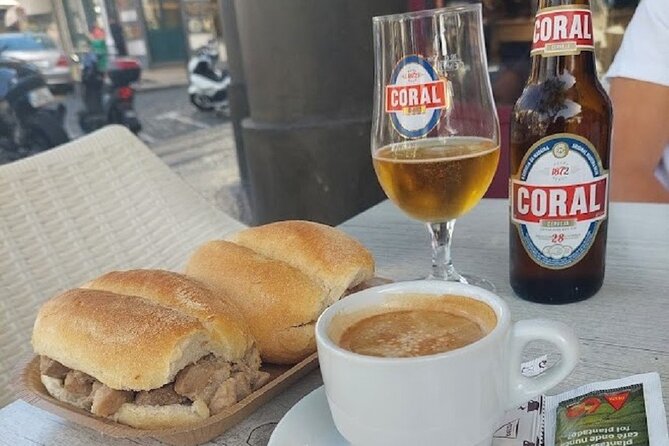
You finish at Mercado dos Lavradores, with the tour concluding at Cica Café. This is the smart ending for two reasons.
First, it gives you permission to eat and slow down right when you’ve earned a break. Second, the market context helps the rest of the walk make more sense. Madeira is geography plus trade plus settlement—and food is where all of that shows up in a very real way.
The route encourages you to savor Madeiran delicacies that reflect the flavors of settlers. The market setting is lively: sights, sounds, and the practical feel of a place where people come daily.
Practical move: when you arrive, don’t “choose later.” Pick a couple items you can actually finish, then explore the market around your lunch. That way you’re not standing in front of everything, hungry, and overwhelmed.
Price and timing: $8.99 that can replace a guided tour
At $8.99 per person, this is priced like an audio experience, not like a professional guided walk. The main value isn’t just the low cost—it’s that you still get a tightly planned set of stops across different themes: gardens, chapel architecture, a Protestant cemetery, the origins story tied to Zarco, and then a market finish.
Duration is about 1 hour 30 minutes to 2 hours, which makes it easy to plug into a day without derailing your schedule. If you’re on a first visit, this is long enough to start understanding how Funchal’s center is structured. If you’re on a repeat visit, it’s short enough to add context without feeling like you’re “working” too hard.
When to book: the tour is commonly booked about 9 days in advance. If you’ve got fixed dates, I’d plan ahead. If your schedule is flexible, you can usually manage as long as you arrive ready to download and run the audio when you start.
One more practical note: the experience is available every day with broad opening hours. That means you can choose a time that fits your energy—morning for cooler walking, later in the day if you want more relaxed strolling.
What I’d bring (and what you should watch for)
This walk is mostly about steady walking between stops. Good shoes matter, especially because Funchal’s cobblestones and uneven patches can be a surprise if you’re in flimsy footwear.
Bring a phone with enough battery, plus a plan for charging if you stay out all day. Since it’s self-guided, you’ll want the audio to play without interruptions.
Also consider your interests. If you mainly want panoramic viewpoints and don’t care about religious architecture, the Protestant sites may feel like a detour. If you like learning how places connect—economy to church, settlement to city planning—this itinerary will likely click fast.
Who this walk suits best (and who should skip it)
I think this works especially well if you:
- want a structured route without locking into a guide’s pace
- like stopping to read and look closely
- travel solo or with a small group that wants privacy
- prefer an audio format over a lecture
It may be less ideal if you:
- strongly dislike following instructions from a phone
- expect a focus on one big “cathedral stop”
- want a guide who can answer spontaneous questions on the spot
One thing to note: the route covers many key religious sites, but if you’re specifically hoping for the Cathedral, you might find it’s not part of this exact sequence.
Should you book this Funchal historic walk?
If you want a low-cost, high-structure introduction to Funchal’s center, I’d book this. The combination of Quinta Vigia, Santa Catarina Chapel, Protestant sites, São Pedro’s cobblestones and churches, Zarco, the fortress palace, and a market finish gives you a well-rounded day without turning it into a marathon.
Book it if you like history that shows up in real places—and you don’t mind letting your phone lead the way.
FAQ
How much does the tour cost?
It costs $8.99 per person.
How long is the walk?
It takes about 1 hour 30 minutes to 2 hours.
What language is the tour in?
The tour is offered in English.
Where do I start the experience?
You start at Quinta Vigia, Av. do Infante 1, São Martinho, 9000-015 Funchal, Portugal.
Where does the tour end?
The tour ends at Cica.Mercado Lavradores (Lj. 1/2, Funchal), with the tour concluding at Cica Café.
Is this a private tour?
Yes. Only your group participates.
When is the tour available?
It shows opening hours of 12:00 AM to 11:59 PM, Monday through Sunday.
Are service animals allowed?
Yes, service animals are allowed.
What is the cancellation policy?
You can cancel for a full refund up to 24 hours in advance of the experience start time.
How far in advance should I book?
On average, it’s booked 9 days in advance.