REVIEW · FUNCHAL
Sea 2 Mountain Running Tour (Moderate-Hard)
Book on Viator →Operated by Madeira Trail Tours · Bookable on Viator
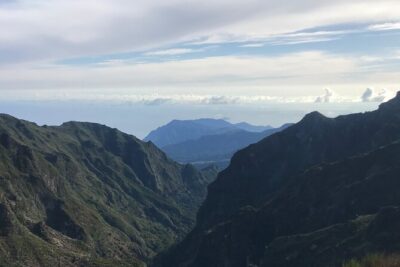
Sea to mountain, in one breathy run. This sea-to-mountain trail experience takes you from Funchal’s shoreline up toward 900 m, then carries you through native forest and back with the ocean always nearby. It’s all about that shift in scenery and effort: hard early, then calmer running with real local flavor.
What I love most: you get the levada-style running (cooler, calmer, and scenic) and a route that your guide can actually adjust on the fly. I also like the small group cap of 6 travelers, which makes it feel more like training with a local than a cattle-call tour.
One consideration: the first stretch is steep—about 900 m of climbing over roughly 5 km—so if you hate uphill running or you’re not used to trail footing, this will feel like more than a stroll.
In This Review
- Key highlights
- From Pestana CR7 to Vereda Do Larano: Your sea-level launch
- 5 km to about 900 m: The climb that sets the tone
- Levada running inside Madeira Laurissilva: Where things get calmer
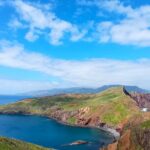
- Ocean views on the finish: Ending by the shore with real reward
- Dinarte and the small-group difference: pacing, stories, and adjustments
- 28 km, around 1,000 m: How hard is “moderate-hard” really?
- Pickup, meeting point, and how to plan a smooth start
- What to bring, what to watch for, and Madeira weather reality
- Value check: Why this tour can feel worth $78.27
- Should you book Sea 2 Mountain Running Tour?
- FAQ
- How long is the Sea 2 Mountain Running Tour?
- What distance and elevation should I expect?
- Where does the tour start in Funchal?
- Is pickup included?
- What physical fitness level do I need?
- What if the weather is poor or I need to cancel?
Key highlights
- Steep opener, then easier running: expect the toughest effort in the first 5 km
- Madeira Laurissilva forest vibe: trail running inside a native forest setting
- Levada time: long sections are set up for relaxed movement
- Ocean sound stays with you: you’re never far from the coast’s backdrop
- Small groups (max 6): more personal pacing and attention from your guide
- Guide photos and route tweaks: Dinarte adjusts when legs need it
From Pestana CR7 to Vereda Do Larano: Your sea-level launch
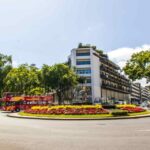
You start in Funchal near Pestana CR7, at Praça CR7 on Av. Sá Carneiro (São Martinho). The activity ends back at the same meeting point, which keeps the day simple and prevents the usual end-of-run scramble.
If you’re staying in Funchal, pickup is offered from where you’re staying. If you’re outside Funchal, pickup is still possible, but you’re told to plan for an earlier pick-up time. For a trail run that’s only about 4 hours, that matters: you want your day to start running quickly, not waiting around.
The route itself has a clear storyline. You begin at sea level and climb up toward the heights fast. Then the trail work changes gears: the early “pay attention” section is followed by easier trails that let you settle into rhythm. That mix is why this experience works for a lot of runners who want challenge without spending the whole day fighting every step.
And yes, you’ll keep seeing and hearing the ocean during the run. That constant coastal soundtrack makes the day feel less like training and more like moving through Madeira’s geography in real time.
You can also read our reviews of more tours and experiences in Funchal.

5 km to about 900 m: The climb that sets the tone
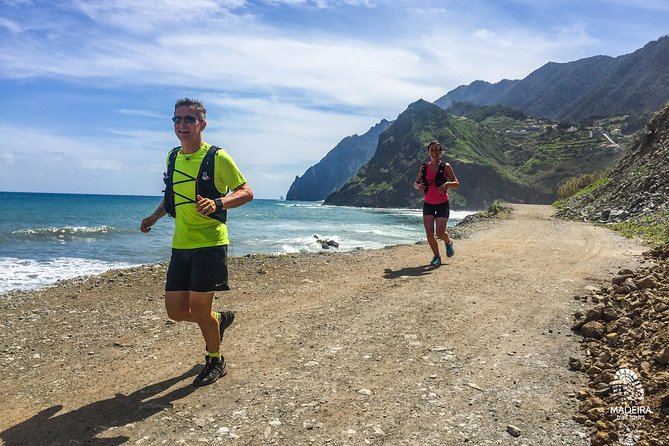
The toughest part is upfront. The first 5 km climbs from sea level to around 900 m, which is a big altitude change packed into a short distance. One review note that really fits here: it can feel intense with humid heat on top of the steep gradient.
If you’re used to road running, this can create a different kind of tension. Roads let you ignore footing. Trails don’t. The goal here isn’t sprinting—it’s managing effort so your legs are ready for the easier running that comes later.
My practical pacing advice: think controlled and steady at the start, even if you feel good. Treat the early climb like the warm-up for your “real run,” not the victory lap. You want to arrive at the higher trail sections with enough energy to enjoy them, not just survive them.
Also, take advantage of shade when it appears. One of the best things about this route is that later parts can offer better comfort from the forest cover, meaning you’re not roasting the entire way. That’s a big deal on Madeira, where weather can shift and humidity can sneak up on you.
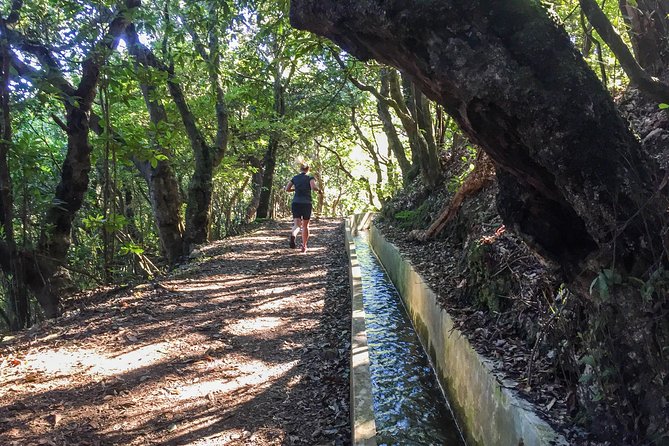
Levada running inside Madeira Laurissilva: Where things get calmer
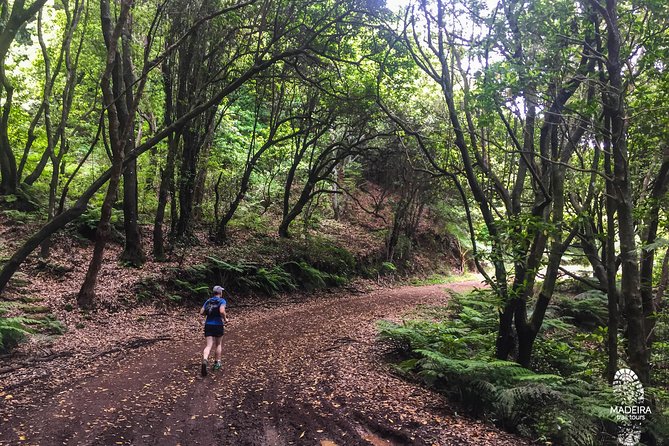
After that big opening climb, the route becomes much more friendly. The overall plan is still 28 km with about 1,000 m of elevation gain/loss, but you’ll spend longer stretches on very easy-running trails.
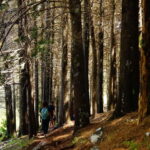
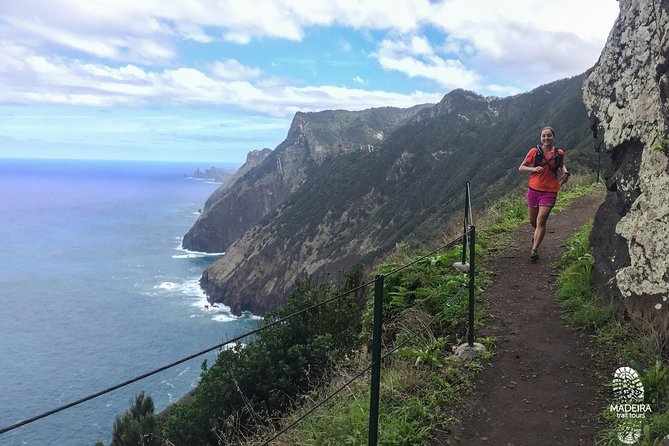
This is where the native forest setting matters. Madeira Laurissilva is the island’s famous forest world, and trail running through it tends to feel cooler and more sheltered than open slopes. One of the standouts from past run experiences is how you can find sections with shade and very few stretches of full sun exposure.
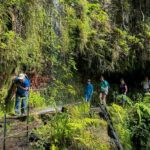
You’ll also run on a levada. If you don’t know what that is yet, think of it as Madeira’s historic irrigation channel system, often paired with walking and running paths. The levada trails usually feel like smoother, more predictable terrain compared to scramble-heavy mountain segments.
For you, that means a better chance to actually enjoy the scenery instead of focusing only on foot placement. You can settle into a steady stride, keep your breathing under control, and take in the textures of the forest and the constant sense of moving between sea and mountain.
And because the ocean sound stays present, the day keeps a coastal mood even when the trees are thick around you. It’s a memorable contrast: forest hush on one side, ocean rhythm on the other.
Ocean views on the finish: Ending by the shore with real reward
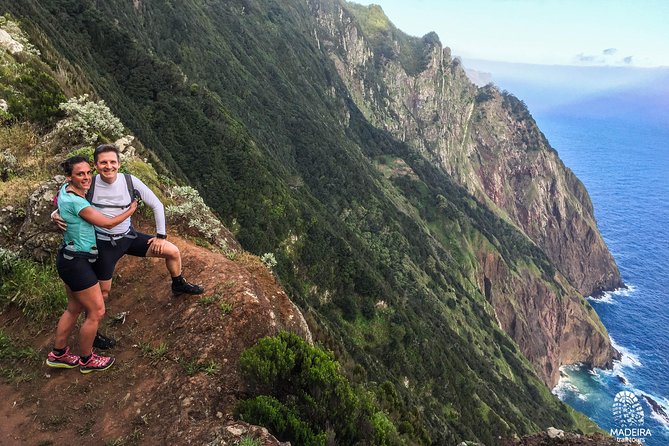
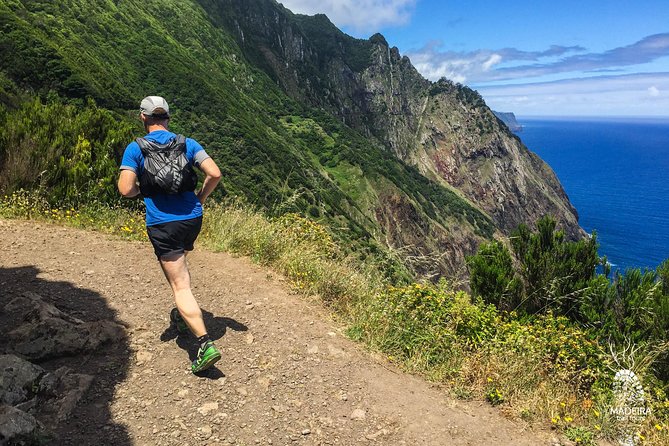
The run finishes smoothly on a trail by the shore. That matters because a lot of trail experiences end with an awkward descent or a rocky finale. Here, the last phase is built to help you land the experience with momentum rather than fatigue.
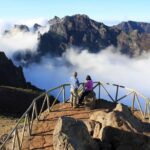
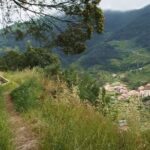
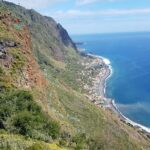
You’ll be able to look out as you move along the coast-side trails, and the ocean atmosphere gives the final stretch a “why this was worth it” feeling. It’s not just scenic—it’s emotional. After a steep start and a forest-and-levada middle, the shoreline ending makes the whole route click.
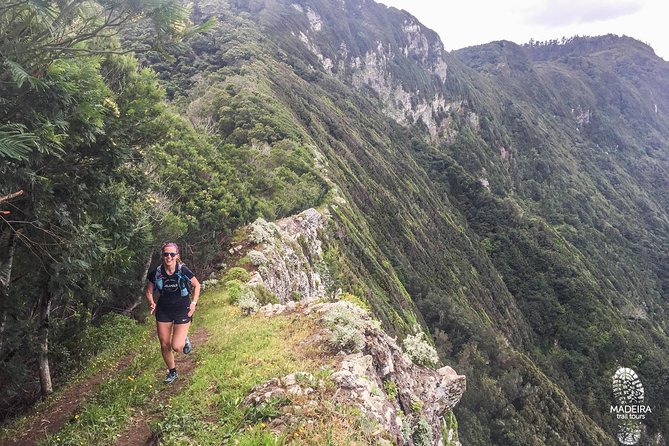
This is also where photos help. In past runs on this route, the guide took excellent photos along the way, so you’re not just hoping for lucky shots on your phone while you’re managing effort. If you care about capturing the day, this is the kind of guided run where you can actually focus on running, then review the images later.
If you want to keep the day going, there’s sometimes an optional add-on of extra distance (an extra 8 km has been mentioned as an option). That’s only for you if your legs feel strong after the main route—this tour already delivers a serious elevation challenge.
Dinarte and the small-group difference: pacing, stories, and adjustments
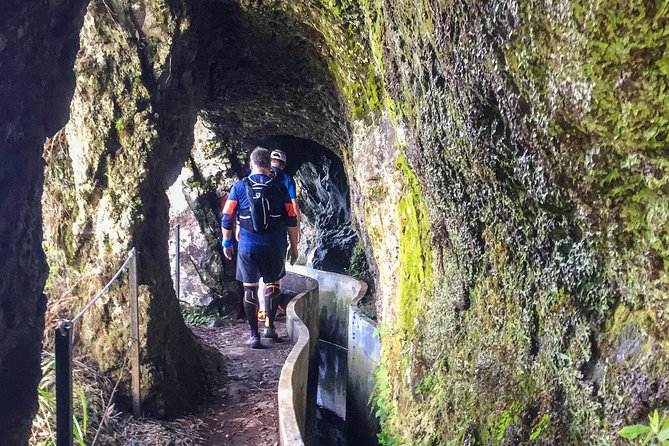
The guide here is the heart of the experience. On this run, you’re with Dinarte, who blends running leadership with local insight. What I like in particular is the way he adapts when something changes mid-run—like leg cramping. Instead of forcing the plan, the route can be swapped to keep you on a stunning, runnable section.
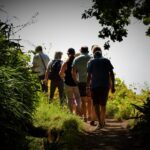
That’s not a small detail. Trail running rewards guides who can read the terrain and read people. With a maximum of 6 travelers, you get that kind of attention without feeling rushed.
Dinarte also explains what you’re seeing: nature, some island history, and running details that make you feel like the trail has context. Even if you’re a confident runner, those bits help you move smarter—what to expect underfoot, where the shade is likely to feel best, and how to pace the climb so the levada sections feel great instead of heavy.
He’s also noted for a friendly, upbeat vibe and maintaining a perfect pace. If you’re traveling solo, that matters too: you’re not stuck running on your own with no guidance. If you’re going as part of a group, it still feels personal because the group size stays small.


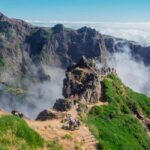
28 km, around 1,000 m: How hard is “moderate-hard” really?
Let’s translate the numbers into effort you can feel. You’re looking at:
- 28 km total distance
- ~1,000 m elevation gain/loss
- About 4 hours in duration (approx.)
- A brutal early climb: 5 km to around 900 m
That means the day is intense in the first third. After that, you get more runnable trails. So the run is not uniformly hard; it’s hard in a concentrated way.
If you’re coming from road-only running, be honest with yourself: the steep climb and trail footing can make the day feel tense, even if you’re fit. If you’re already comfortable on trails and you can control your pace uphill, you’ll probably enjoy this more. And if you love forest running, levadas, and ocean views, you’ll get the payoff fast.
If you’re deciding whether your fitness is right, use this simple test: can you handle a steep uphill push for about 5 km without stopping, and then continue moving afterward? This is listed for travelers with moderate physical fitness, but “moderate” here still means you’ll be working.
The upside is that the tour structure sets you up for recovery. The second half is meant to relax you while keeping the views and trail interest coming.
Pickup, meeting point, and how to plan a smooth start
This tour is designed to reduce friction. Pickup is offered in Funchal, and you start and finish at the same meeting point near Pestana CR7. That makes it easier to pair with other Madeira activities the same day, because you’re not planning a complicated transport web.
You’ll receive confirmation within 48 hours of booking, subject to availability, and you’ll use a mobile ticket. The group cap is 6, and the tour is offered in English, so communication stays straightforward.
If you’re trying to fit this into your Madeira schedule, think of it as a main event. Four hours is short, but the effort is real. I’d avoid planning another demanding hike right before or right after unless you’re used to trail days.
What to bring, what to watch for, and Madeira weather reality
This experience requires good weather. If it’s canceled due to poor weather, you’ll be offered another date or a full refund. That’s a good sign: trail running depends on ground conditions and visibility, and you don’t want to gamble with unsafe footing.
Even with solid weather, Madeira can feel humid. Earlier reviews mention humid heat on the climb, so treat that first ascent like it matters. Bring what you need to stay comfortable: trail-friendly footwear for grip, a hat or light protection if you get sun exposure on any open stretches, and layers that you can manage as you move from cooler forest sections to warmer climb zones.
Also, if you’re the kind of runner who likes to sprint the start, resist that urge. The route is built so that you work early, then you relax. That’s how you get both the challenge and the views.
And yes, if you’re the type who enjoys asking questions, this is a great setup. Dinarte is there for running guidance and for explaining the island around you, so you can learn something while you move.
Value check: Why this tour can feel worth $78.27
At $78.27 per person, you’re paying for a guided, small-group experience with real local terrain: sea-level start, steep mountain climb, levada paths, native forest, then a shore-side finish.
What makes it feel like value isn’t just the price—it’s the package:
- Small group size (max 6) means personal pacing.
- Pickup in Funchal cuts down time and stress.
- A guide who adapts the route when legs need help keeps the experience enjoyable instead of frustrating.
- Photos taken during the run add a nice memory layer, especially if you don’t want to stop constantly.
- The range of environments in one session is the core reason this stands out: you’re literally running through Madeira’s sea-and-mountain story.
The main downside on the value side is also the main truth about the tour: if you want an easy, mostly flat run, this isn’t that. The early climb is a real commitment, and you’ll feel it.
Should you book Sea 2 Mountain Running Tour?
Book it if you’re a runner who wants more than a photo stop. You’ll like it if you enjoy hills you can manage, trail footing, levada paths, and the feeling of being guided by someone who knows how to read conditions and terrain. If ocean views and forest running matter to your trip, this tour hits the emotional sweet spot.
Skip it (or choose a gentler plan) if your trail experience is limited and steep climbs make you panic. The first 5 km climb is big, and you need to be comfortable controlling effort so you can enjoy the later, easier trail sections.
If you want a single guided run that gives you Madeira’s geography in one 4-hour block, with a small group and a guide like Dinarte, this is a strong choice. Just make peace with the fact that the day starts uphill—and then rewards you for sticking with it.
FAQ
How long is the Sea 2 Mountain Running Tour?
It runs for about 4 hours (approx.).
What distance and elevation should I expect?
You’ll cover 28 km with around 1,000 m of elevation gain/loss.
Where does the tour start in Funchal?
The meeting point is Pestana CR7, Praça CR7, Av. Sá Carneiro, São Martinho, 9000-017 Funchal, Portugal. The activity ends back at the meeting point.
Is pickup included?
Pickup is offered for travelers staying in Funchal. If you’re outside Funchal, pickup is available and you’ll be picked up earlier.
What physical fitness level do I need?
The tour is for travelers with a moderate physical fitness level.
What if the weather is poor or I need to cancel?
The tour requires good weather. If it’s canceled due to poor weather, you’ll be offered a different date or a full refund. You can cancel for free up to 24 hours in advance for a full refund; cancelling later won’t be refunded.