REVIEW · MADEIRA
Amazing experience with Bees, honey and Pollen in Madeira Island
Book on Viator →Operated by Bees experiences · Bookable on Viator
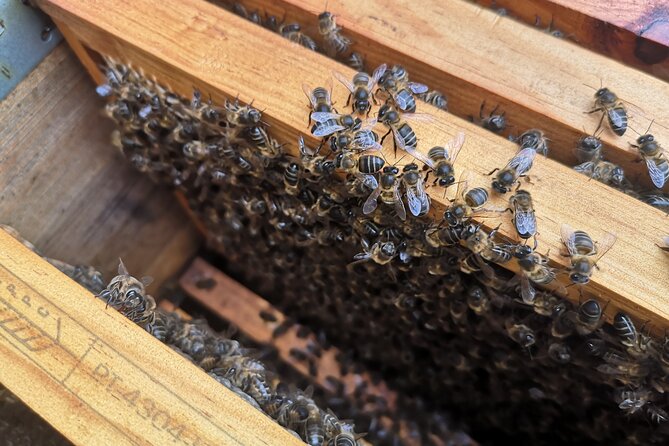
Honey frames and calm bees in Madeira.
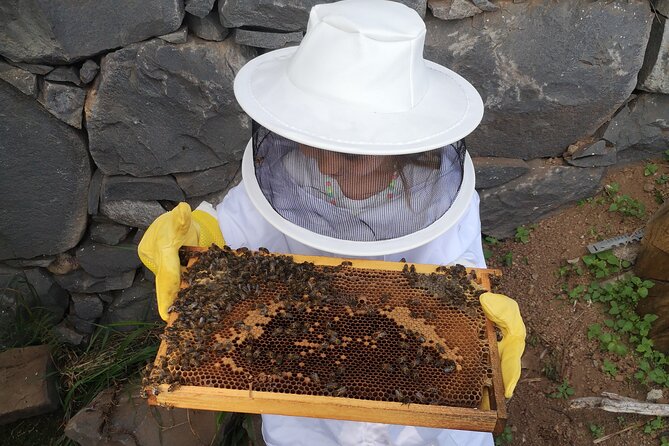
This private experience in Santo António da Serra turns a real hive visit into a hands-on, friendly afternoon, led by Marcia and Helder. I really liked the chance for touching honey frames (with safety kept front and center) and the focus on seeing the hive’s inner life, including attempts to spot the queen bee. It feels more like learning from people who care than a rushed demo.
The main thing to consider is timing and conditions: it runs only in a specific afternoon window on Mondays, and it’s weather-dependent, so you may need a backup plan if conditions are poor.
In This Review
- Key highlights worth planning around
- A private hive visit starting in Santo António da Serra
- Before the hive: what you’re taught in the opening talk
- Visiting the hives: seeing organization, not just insects
- Touching honey frames safely (and why that’s the real magic)
- Queen-bee attempts, hive roles, and what to watch for
- The tasting table: honey, fresh pollen, cheese, cider, and poncha
- Price and logistics: what you’re really paying for
- Who this Madeira bee-and-honey experience fits best
- Should you book this Madeira hive experience?
- FAQ
- Where is the experience located?
- How long does the tour take?
- What time does it run?
- Is this a private tour?
- What’s included in the experience?
- Do I need to bring a printed ticket?
- Is confirmation provided after booking?
- What happens if the weather is poor?
- What is the cancellation policy?
Key highlights worth planning around
- Private group time so you get quieter, more personal attention in the hives.
- Hive education first, so you understand what you’re seeing before you go hands-on.
- Honey frames up close with a safe, peaceful approach.
- Queen-bee spotting attempts and an explanation of hive roles.
- Tasting after the hive featuring multiple honeys plus fresh pollen.
- Food and drink pairing with cheeses and regional cider, and poncha mentioned as a favorite add-on.
A private hive visit starting in Santo António da Serra
If you’re looking for a Madeira activity that feels specific to the island and not just another scenic stop, this one hits. You start and end in Santo António da Serra, and you’ll do the whole experience as a private tour for just your group. That matters because a hive visit is easier when your guide can match the pace to your questions and comfort level.
At a price of $138.58 per person for roughly 4 hours (approx.), it’s not a “grab-and-go” outing. It’s closer to paying for a real, guided learning moment with a tasting at the end. And since the average booking lead time is about 53 days, I’d plan to reserve early rather than hoping for a last-minute slot.
Also, you’ll get a mobile ticket and confirmation at booking. That’s one less thing to think about when you’re already juggling bus schedules, taxis, and the usual Madeira logistics.
You can also read our reviews of more tours and experiences in Madeira.


Before the hive: what you’re taught in the opening talk
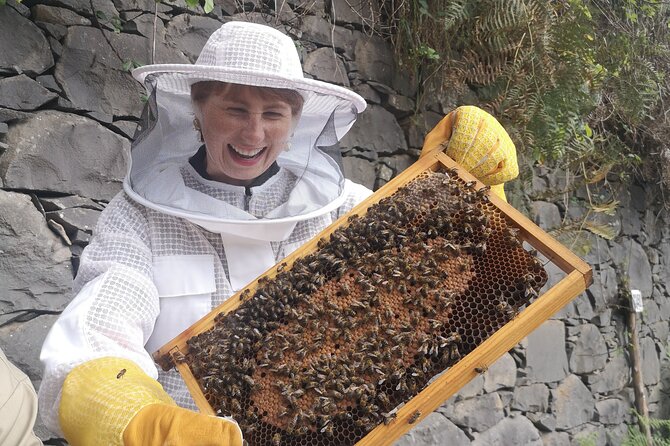
The first part is a warm welcome plus a structured introduction to the hive. You’ll get a brief presentation on the structure and functioning of a hive, which is important because bees can look chaotic if you only show up at the frames without context.
I like that the guide also explains why bees matter for the ecosystem. It turns the visit from a cute animal encounter into something more meaningful. You’re not just watching bees work—you’re learning why their work affects the bigger environment around Madeira.
Then you move into the hives and shift from theory to real observation. This pacing is smart. You’ll know what different areas of the hive are supposed to do, what hive roles generally mean, and what to watch for as the group gets closer.
Visiting the hives: seeing organization, not just insects
Once you’re at the hive, the guide describes and shows how the hive is organized. This is one of those experiences where the order matters: you’re not simply told that the hive has roles, you’re guided to observe them.
You also learn about different types of bees, and the guide tries to show the queen bee. Even if it’s not guaranteed to spot her instantly, the effort itself is part of what makes this memorable. It’s less about a checklist and more about understanding what makes the queen different and why that role matters inside the hive.
The tone stays calm and careful. The experience is designed around the idea that you can discover how wonderful visiting a hive can be—in a safe and peaceful way. That’s the difference between “watching from a distance” and actually learning how a hive behaves.
Touching honey frames safely (and why that’s the real magic)
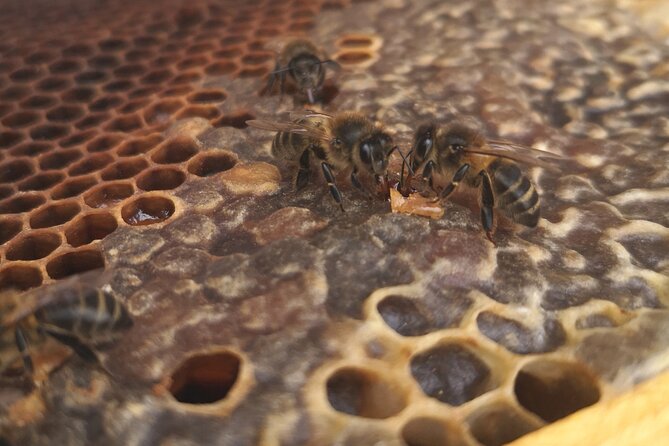
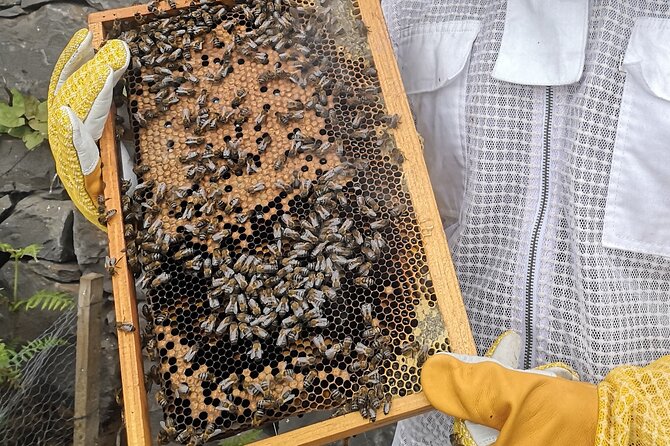
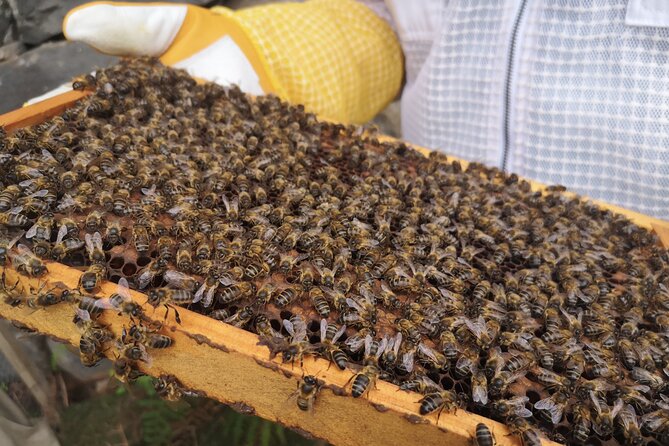
The highlight for me is the hands-on moment with the honey frames. You can pick up the honey frames and observe bee behavior up close. That step turns the experience from informative to unforgettable.
Now, I’ll be honest about the mindset you need: a hive visit is not the time for big, fast movements or panic. The guides focus on safety first, and they set expectations so you know how to behave around the frames. In a private setting, that guidance feels more personal, and it becomes easier to relax.
What I like most is that this isn’t framed as a thrill ride. It’s framed as respectful observation. You’re there to understand the bees’ routine and the structure of the hive, not to “collect selfies” at any cost.
This is where the earlier explanation pays off. When you’ve already been oriented to the hive’s structure, touching the frames makes sense. You’re not guessing—you’re watching and learning.
Queen-bee attempts, hive roles, and what to watch for
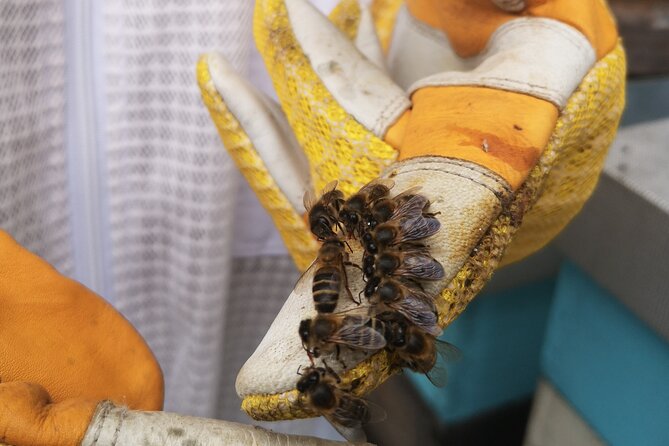
The guide tries to show the queen bee, and they also explain the hive’s different bee types. Even if queen spotting isn’t instant, you still come away with a clearer picture of what “queen” means in real life, not just in a diagram.
Here’s the practical way to approach it: don’t fixate only on finding the queen. Use the moment to watch how the hive responds as frames are handled. That gives you a better feel for the hive’s internal logic—what stays steady, what changes with movement, and how bees distribute their attention.
The experience also includes time where you can observe behavior up close. That’s valuable because you learn the difference between frantic activity and normal hive behavior. The guide helps you interpret what you’re seeing, which is what makes the visit click.
The tasting table: honey, fresh pollen, cheese, cider, and poncha
After the hive time, you get the payoff: a tasting that connects the work you just saw to flavors you can actually take home. The tasting includes various honeys plus fresh pollen, along with cheeses and regional cider.
This part is more than a snack. It’s how you connect the sensory side of the experience with the biology. You’re not just learning that bees collect pollen and produce honey—you’re tasting the result. And because you get multiple honeys, you can compare flavors in a way that’s hard to replicate on your own.
I also like that there’s a food and drink pairing. Cheese helps balance sweetness, and cider adds another Madeira-appropriate layer. One of the memorable notes from the experience is that you may get poncha on the side, which makes the tasting feel extra Madeira rather than generic.
If you like tasting activities, this will land well. If you’re not usually a honey person, the guide-led context can help you find a honey style that works for you, instead of forcing you to like everything.
Price and logistics: what you’re really paying for
At $138.58 per person, you’re paying for a guided, private hive encounter plus a structured tasting. You’re not just paying for access to a hive—you’re paying for instruction and attention.
This is especially valuable if you want more than a quick look. Private time means fewer rushed moments, and the guide can adapt the pacing to your group. For many people, that’s where the value sits: you leave feeling like you understood something, not just watched something.
The schedule also matters. The stated hours show Mondays, 3:00 PM to 5:30 PM, and the overall experience is listed as about 4 hours. I’d plan around the full afternoon block and expect it may run close to that longer end depending on what the guide is showing and how your group engages.
You’re booking a natural-conditions experience, too. It requires good weather. If weather cancels it, you’ll be offered another date or a full refund, so you’re not stuck.
Who this Madeira bee-and-honey experience fits best
This tour fits best if you like hands-on learning and you’re curious about how local traditions connect to nature. It’s ideal for couples, friends, and families who want something different from the typical Madeira hits.
It also works well if you’re the kind of traveler who enjoys food pairings that have a story behind them. Honey and pollen tastings can feel a little “touristy” when they’re added to the end for show. Here, they connect directly to the hive activity.
What about less suitable scenarios? If you strongly dislike bugs or you’re anxious around small animals, it might still be possible because the experience is framed as safe and peaceful—but I’d think carefully. You’ll be near an active hive, and the point is close observation.
The good news: the experience notes that most travelers can participate, so it’s generally designed to be accessible in normal travel conditions.
Should you book this Madeira hive experience?
I’d book it if you want a Madeira activity that feels grounded in real life: a hive visit where you actually understand what you’re seeing, plus a tasting that tastes like Madeira. The standout advantages are the private, personalized feel and the hands-on honey frame moment, led by Marcia and Helder.
I’d pass or wait if you can’t be flexible about weather or you’re only available outside the Monday afternoon window. Also, if you want purely scenic photography with minimal interaction, this is more hands-on and instructional than that.
If your schedule allows, this is the kind of tour that gives you a story you can explain later: not just that you saw bees, but that you learned how the hive works and tasted what the bees produce.
FAQ
Where is the experience located?
The experience starts in Santo António da Serra, Portugal, and it ends back at the meeting point.
How long does the tour take?
It runs for about 4 hours (approx.).
What time does it run?
The opening hours listed are Mondays from 3:00 PM to 5:30 PM.
Is this a private tour?
Yes. Only your group will participate.
What’s included in the experience?
You get a hive presentation, time to visit the hives and observe bee behavior, and a tasting of various honeys, fresh pollen, cheeses, and regional cider.
Do I need to bring a printed ticket?
No. It uses a mobile ticket.
Is confirmation provided after booking?
Yes. Confirmation is received at the time of booking.
What happens if the weather is poor?
The experience requires good weather. If it’s canceled due to poor weather, you’ll be offered a different date or a full refund.
What is the cancellation policy?
Free cancellation is available up to 24 hours in advance for a full refund. If you cancel less than 24 hours before the start time, the amount paid is not refunded.