REVIEW · FUNCHAL
Northeast 4×4 Santana and Landscapes Day Trip
Book on Viator →Operated by Green Devil Safari · Bookable on Viator
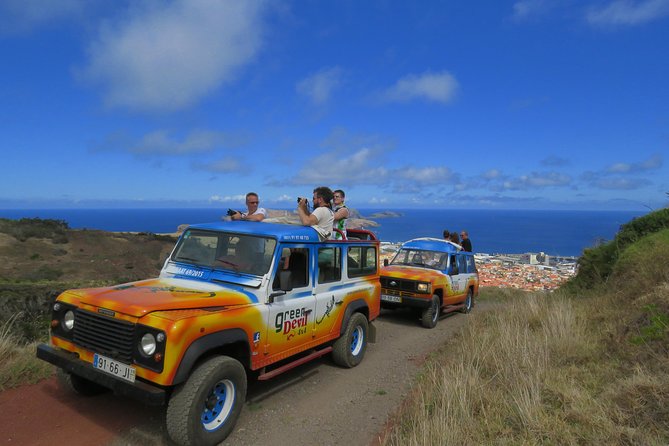
Madeira’s north-east feels like another world. This 8-hour 4×4 day trip mixes small seaside villages, big ocean outlooks, and two very different stops tied to Madeira’s sugar-and-rum story—plus hotel pickup in the Funchal area. I like how the tour keeps the group small and structured, so you’re not stuck watching a line of buses at every turn.
I also like the way the itinerary connects places to people—there’s time to learn about the first settlers of the Azores Islands and how that early chapter fits Madeira’s story. You’ll also get a real taste of “how locals live,” from working agricultural areas to a rum factory that still runs old-school equipment.
One thing to consider: bottled water is listed as included, but you may want a backup plan in case bottles aren’t handed out on the day.
In This Review
- Key things to know before you go
- Why this north-east Madeira route is worth a full day
- Price and logistics: what you’re really paying for
- Stop 1: Ponta Delgada and the view-over-the-cliff feeling
- Stop 2: Boaventura’s calm valleys and near-isolated feel
- Stop 3: Arco de São Jorge and the mix of sea, mountains, and vineyards
- Stop 4: São Jorge and the sugarcane / Madeira-wine connection
- Stop 5: Casas Tipicas de Santana and triangular house reality
- Stop 6: Fortim do Faial—viewpoint history with English-origin artillery
- Stop 7: Porto da Cruz and the cross that named the port
- Stop 8: Engenhos do Norte—steam engines and a working distillery feel
- Stop 9: Caniçal fishing village and the tuna / reed story
- What you’ll learn about Azores settlers during the day
- Who this tour fits best—and who should think twice
- Practical tips to get the most from the 8-hour schedule
- So, should you book this 4×4 Santana and north-east day trip?
- FAQ
- Where does pickup happen?
- What time does the tour start?
- How long is the day trip?
- How many people are in the group?
- What’s included in the price?
- Is lunch included?
- Is the tour offered in English?
- What’s the cancellation policy?
Key things to know before you go
- Small group size (max 8 travelers) helps keep stops practical and questions easy
- Funchal pickup included for hotels in the Funchal area, with extra fees outside Funchal and at the cruise dock
- Santana’s triangular houses date back to the 16th century and are a quick, memorable photo stop
- Porto da Cruz and Engenhos do Norte focus on sugarcane and rum, with a working distillery feel
- Fortim do Faial is a viewpoint site with historical artillery pieces tied to local feast traditions
- Short village stops mean you’ll see a lot, but you’ll want to move efficiently for photos
Why this north-east Madeira route is worth a full day
This is the kind of day trip that works because it’s built around variety. You start with coastal views, then you move through older settlements and farm country, and you end with the rum-processing side of Madeira. The north-east can feel quieter and more “off the main drag,” so the trip doesn’t just hit postcards—it gives you a sense of how different the island feels when you’re not living on the south coast.
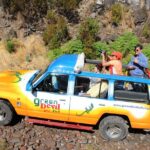
The 4×4 format matters here. Even without getting into technical details, you’ll notice the route is designed for Madeira’s rougher, winding roads and for reaching places that wouldn’t be fun on a standard bus. Add the small group size, and the day tends to feel more like a guided drive with stops, not a rushed checklist.
And value-wise, at $82.82 per person for about 8 hours, you’re getting a lot of pre-planned movement plus a local guide. The big tradeoff: this isn’t a slow, linger-all-day itinerary. Each stop is measured, so if you hate being timed, you’ll feel that.
You can also read our reviews of more tours and experiences in Funchal.


Price and logistics: what you’re really paying for
At $82.82 per person, the price covers the essentials that usually make island tours expensive: hotel pickup and drop-off (Funchal area), a local guide, and a driver/guide. You’ll also get bottled water listed as included, and that can be a small comfort on a day that’s mostly spent out and about.
A couple of extra costs are worth knowing so you don’t get surprised:
- Lunch isn’t included. There’s an extra cost of €12 per person if you want it.
- Pickup math can change based on where you start. Funchal area hotels are free, but outside Funchal may require extra fuel tax, and cruise dock pickup has an additional €5 per person.
Timing is also part of the value. With a 8:30 am start, you get a full working day before the afternoon winds up and the roads get busier.
Finally, there’s a small reality check from the experience: even though bottled water is listed, you might not get bottles in hand. I’d treat that as a bonus, not a guarantee. If you’re picky about hydration or planning to carry snacks, bring a backup drink.
Stop 1: Ponta Delgada and the view-over-the-cliff feeling
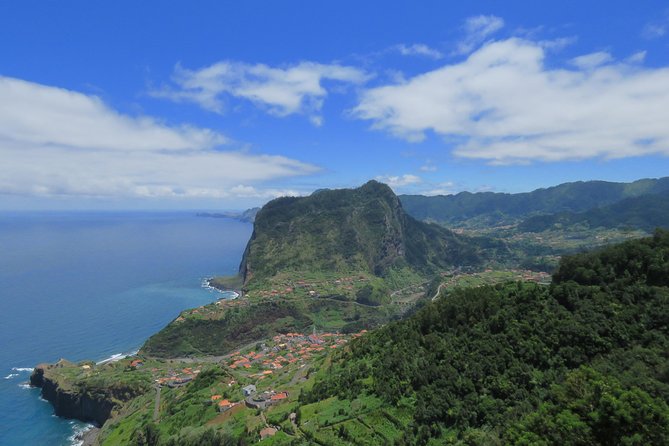
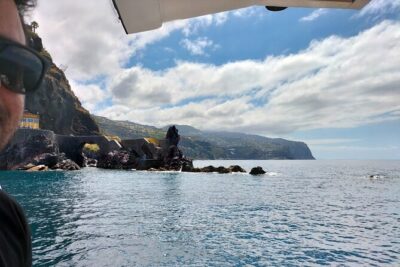
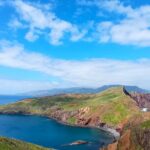
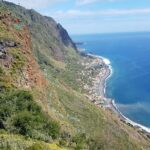
Ponta Delgada is your “wake-up call” stop. You’re looking out over a cliff and getting that immediate Madeira sensation: sea air, steep terrain, and the sense that towns grow wherever there’s a safe edge.
This is a short 15-minute stop, but it’s the kind of time you can use well. Aim for quick orientation first: spot the local church by the sea and take in the setting. You’ll also see the new pool complex, which gives you a hint of how locals balance tradition with everyday modern life.
What I like about this stop is that it sets the tone. You’re not just walking past buildings; you’re learning how geography shapes what exists where.
Stop 2: Boaventura’s calm valleys and near-isolated feel
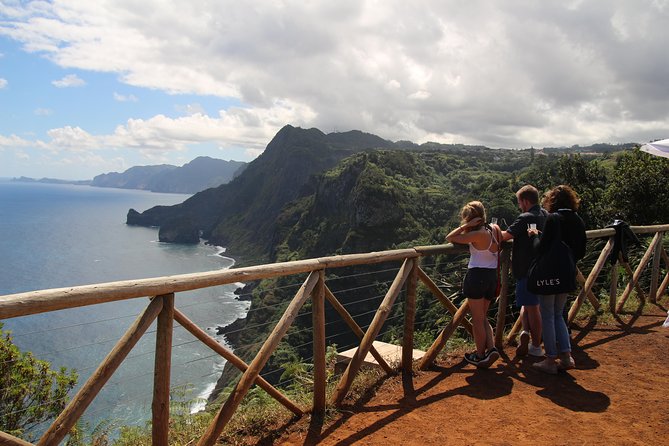
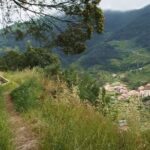
Boaventura is a hillside village defined by agriculture and water. The description tells you the valleys are cut by courses of water, and that matters because it’s part of why this place feels quieter. It’s also described as one of the oldest colonised villages and almost isolated from the world nearby—so you get a different vibe than the more tourist-centered pockets.
You’ll have about 10 minutes here. That’s enough time for a short wander and a couple of photos if you pick one direction and commit. Look for the way the village sits against the valleys and notice how greenery and water work together.
If you’re the type who likes “small place, big feeling,” this stop delivers. If you’re expecting big attractions, it can feel simple—but that’s often the point on a north-east route.
Stop 3: Arco de São Jorge and the mix of sea, mountains, and vineyards
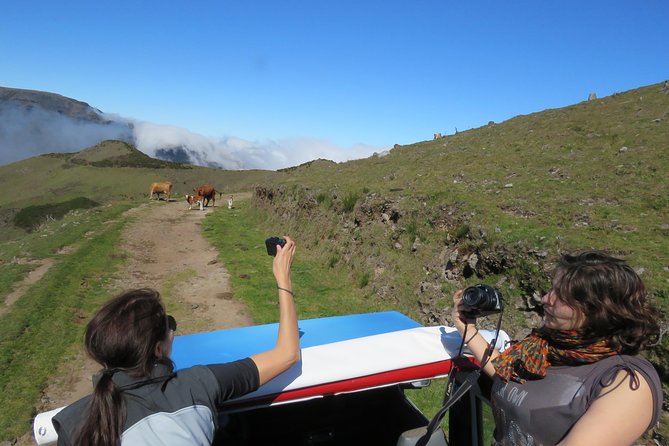
Arco de São Jorge is another quick 10-minute stop, and it’s worth treating as a scenery stop. The village is described as seaside, with mountains and vineyards around it, and it’s in the northeast with a population around 520.
The micro-idea to remember here is that Madeira’s agricultural success is tied to conditions that vary block to block. Arco de São Jorge is described as fertile due to its microclimate, so even in a short stop, you’re seeing the logic behind why so much farming happens on the slopes.
Use the time like this:
- Take a wide view first (so you remember the “whole picture”)
- Then pick a detail to photograph (a vineyard edge, a wall, a stretch of coast)
It’s not a museum stop. It’s a “get your eyes adjusted to the island” stop.



Stop 4: São Jorge and the sugarcane / Madeira-wine connection
São Jorge is where the tour leans harder into food and agriculture. You’ll get about 10 minutes here, and the key story is fertility: this is described as perhaps the most fertile of the northern villages, producing many agricultural products. Two are singled out:
- Sugarcane, and
- Malvasia wine, the grape used for Madeira wine.
That connection matters because it sets up what you’ll later see at the rum distillery. In other words, this stop isn’t random geography. It’s the “why” behind Porto da Cruz and Engenhos do Norte, where sugarcane processing and rum production take center stage.
If you’re a wine person, you’ll probably enjoy the Madeira wine hint. If you’re not, it still helps to know the island isn’t just scenic—it’s productive, and that productivity shaped the economy.
Stop 5: Casas Tipicas de Santana and triangular house reality
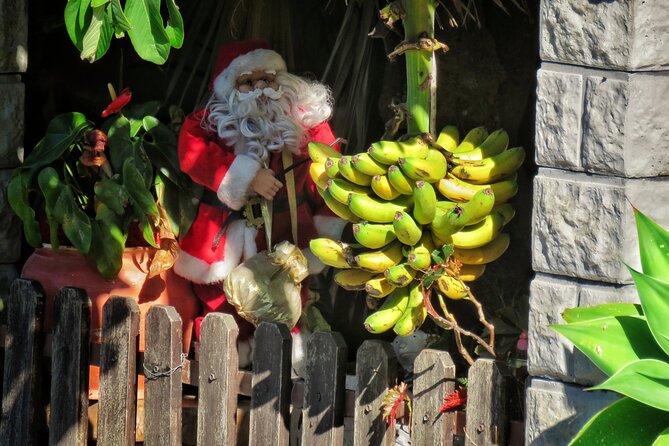
Then you reach Santana, and it’s an instant contrast. Casas Tipicas de Santana are famous for the colourful triangular traditional houses—built with stone and topped with a straw thatch roof. They’re described as originating in the 16th century, and today they’re kept as a tourist attraction.
You’ll have about 15 minutes. Use it for two things:
- Walk the edges and get a sense of what the house shape looks like from different angles. Triangles can look weird in photos; you’ll see why once you view them from the side and front.
- Look for details in the materials. Stone + thatch tells you something about local building logic.
This stop is popular for a reason: it’s visually memorable, and it’s a quick way to understand that Madeira’s identity isn’t only about views. It’s also about building traditions shaped by climate and resources.
Stop 6: Fortim do Faial—viewpoint history with English-origin artillery
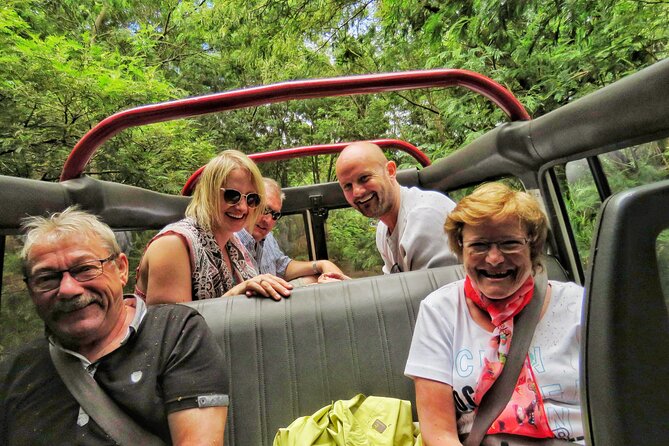
Fortim do Faial is a 10-minute stop that mixes scenery with a bit of military history. Early in the 20th century, this place was used as a viewpoint, and it still preserves that function today—so expect you’ll be looking out more than you’re reading.
The standout detail is the artillery pieces: the site is described as decorated with 10 pieces of smooth-sided anti-artillery of English origin, assembled in naval repairs. That’s unusual enough to be worth your attention, and the local tradition adds another layer: the artillery was traditionally used to save on feast days in honor of Our Lady of the Nativity.
This is a “quick facts, strong mood” stop. If the guide gives you context as you’re there, don’t rush your questions. That story is part of why the fort site isn’t just a viewpoint platform.
Stop 7: Porto da Cruz and the cross that named the port
Porto da Cruz is short—around 5 minutes—but it has a lot packed into it. The town name comes from a cross placed on the shore to mark the port for Portuguese explorers. That explorer-linked origin is the kind of detail that instantly changes how you look at a shoreline town.
Agriculture and industry also show up:
- Sugarcane was historically important
- The processing factory is still operating
- It produces rum and honey molasses, and it has been operating since 1927
- It also produces vinho seco, a dry red wine
- There’s an annual grape festival
Because time is tight, focus on the big picture: this isn’t just a pretty port stop. It’s the start of the rum narrative—your next stop is where you’ll see that story in action.
Stop 8: Engenhos do Norte—steam engines and a working distillery feel
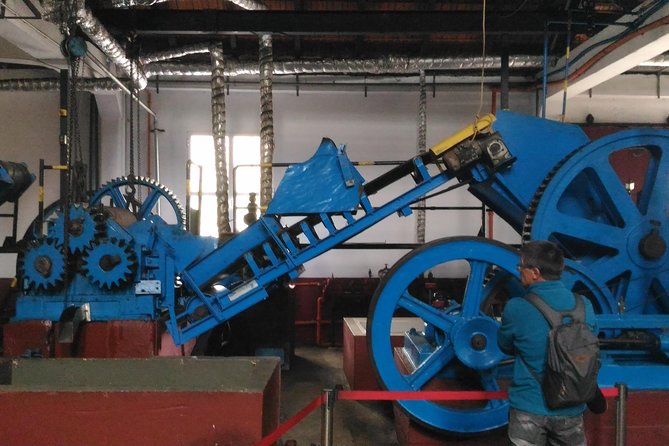
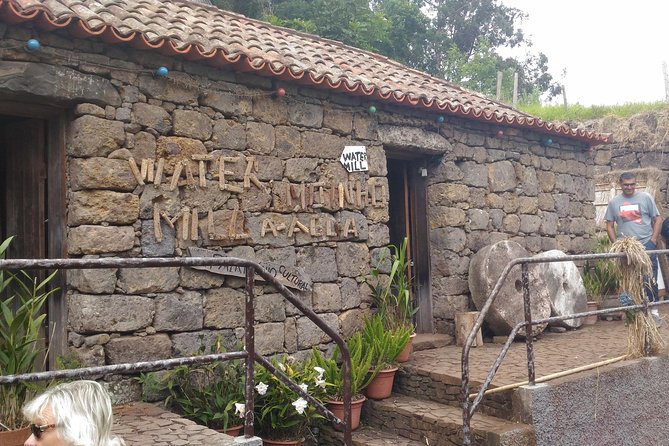
Engenhos do Norte (also tied to Porto da Cruz) is one of the most interesting parts of the day for practical reasons: it explains Madeira’s sugarcane legacy with equipment you can actually see.
You’ll have about 15 minutes here. The distillery is described as ancient, and it testifies to sugarcane’s importance on the island. The working detail I’d underline is this: there are ancient steam engines that set the working pace, and the equipment is maintained by original workers who keep it operational.
That’s a big difference from a lot of “tourist factory” stops. Here, it sounds like you’re not only looking at history—you’re seeing a living connection to production.
If you care about how places work, this is the one that will stick in your memory. Take a few photos, but also give yourself a moment to just stand and watch how the space feels.
Stop 9: Caniçal fishing village and the tuna / reed story
The day ends with Caniçal, a small fishing village where the main catch is tuna. The description also includes the origin story of the name: it comes from reeds (Caniço) that grew in more arid areas of the parish. Those reeds were initially used as fishing rods, showing how fishing shaped daily materials and naming.
You’ll have about 10 minutes. This final stop is often the easiest one to appreciate because you can let your senses do the work. Look at the coastal setting, notice how the village relates to the water, and connect it back to what you saw earlier—agriculture up the slopes, production in the middle, fishing down on the shore.
It’s a clean loop back to the sea, which is exactly what makes a north-east route feel satisfying instead of random.
What you’ll learn about Azores settlers during the day
One of the listed highlights is learning about the first settlers of the Azores Islands. Even though that story isn’t assigned to one single stop in the itinerary, it’s the kind of topic that fits naturally in villages and viewpoint areas where history is part of the landscape.
When your guide brings it up, pay attention to the links: why people moved, how communities formed, and how those early choices influence what you see now. On a day like this, the “lesson” is often as valuable as the scenery—especially when you’re bouncing between village types (farm, port, fort, and fishing).
Who this tour fits best—and who should think twice
This trip is a strong match if you:
- Want a full-day mix of north-east Madeira without planning each stop yourself
- Like having a guide explain connections between places
- Enjoy a small-group vibe and don’t need hours at each stop
- Are interested in sugarcane, rum-making, and how production shapes towns
You might want to think twice if you:
- Prefer long time at a single viewpoint or museum-like attraction
- Need guaranteed bottled water service, because it’s listed but may not be handed out in practice
- Really dislike time-limited stops, since most stops are 5–15 minutes
Practical tips to get the most from the 8-hour schedule
This is a stop-heavy day. The best strategy is to travel light and move smoothly:
- Wear shoes you trust for uneven ground, since coastal viewpoints and village areas can be sloped or rough
- Use your photos as “memory anchors,” not endless scrolling time
- Plan for lunch being optional and extra (€12), and bring a snack just in case
- If you’re sensitive to sun or wind, bring something light; coastal north-east weather can shift
And if you’re the type who likes to ask questions, this tour’s small size makes it easier. Use that to learn beyond what you’d guess from looking alone.
So, should you book this 4×4 Santana and north-east day trip?
If you want one day that feels like Madeira’s working island—not just an endless drive past overlooks—this is a smart book. The itinerary connects villages to agriculture, and agriculture to rum production, with Santana’s triangular houses and Fortim do Faial giving you variety in between.
The main reasons to book:
- Small group (max 8) and guided storytelling
- Engenhos do Norte for a real distillery stop with equipment that stays active
- A logical route across the north-east: cliff views, farming towns, Santana architecture, rum/port life, then tuna-fishing Caniçal
The main reasons to be cautious:
- Stop times are short, so don’t expect a slow pace
- Bottled water is listed, but you should plan as if you may need to purchase a drink
If that sounds like your style, go for it—this is the kind of day trip that leaves you with more than photos. It gives you a sense of how the north-east runs, from sugarcane to rum to fishing.
FAQ
Where does pickup happen?
Pickup is offered with hotel pickup and drop-off in the Funchal area for free. Outside of Funchal, there may be extra fuel tax. If you’re at the cruise dock, there’s an extra fee of €5.00 per person.
What time does the tour start?
The start time is 8:30 am.
How long is the day trip?
The duration is about 8 hours.
How many people are in the group?
The tour has a maximum of 8 travelers.
What’s included in the price?
Included items are a local guide, driver/guide, hotel pickup and drop-off (for eligible areas), bottled water, and hotel/port pickup and drop-off as described.
Is lunch included?
No. Lunch is extra (€12.00 per person).
Is the tour offered in English?
Yes. It is offered in English.
What’s the cancellation policy?
You can cancel for a full refund up to 24 hours before the experience start time. Free cancellation applies up to that cutoff, based on local time.