REVIEW · FUNCHAL
Full Day Santana Wonders and Northeast 4WD Experience
Book on Viator →Operated by Green Devil Safari · Bookable on Viator
One day, a lot of Madeira.
This full-day 4WD loop hits Madeira’s northeast natural wonders and small villages with quick photo breaks, then slows down where it matters. From Sao Vicente’s old wine manor vibe to the rum-and-steam machinery at Engenhos do Norte, the route mixes viewpoints, agriculture, and coastal life in a way that feels very Madeira.
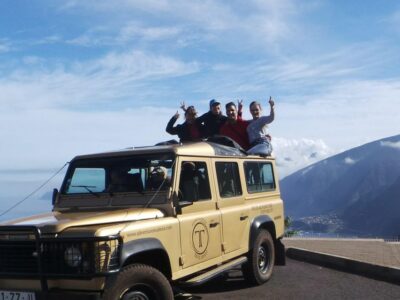
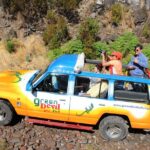
I really like two things about this experience: the hotel pickup from Funchal and Caniço (easy start), and the 4WD-style countryside driving that turns a road trip into something more fun. Guides such as Jose, Duarte, and Leno/Lino come up in feedback, and that matters—because the difference is not the scenery, it’s the explanations and the way the day is paced.
One consideration: this is an 8-hour day with short stops. If you like to wander slowly for long stretches, you may feel rushed at places where the stop time is more like a quick look than a deep visit—especially the villages.
In This Review
- Key highlights worth planning for
- The big idea: a full day for seeing Madeira’s north fast
- Pickup and driving in a 4WD: what to expect
- Price and value: $81.66 with real tradeoffs
- Stop-by-stop: Sao Vicente wine manors to Caniçal tuna village
- Sao Vicente: old manor houses shaped by viticulture
- Ponta Delgada: cliff views plus church-by-the-sea energy
- Boaventura: quiet valleys, water channels, and a “sanctuary” feel
- Arco de São Jorge: seaside village, mountains, and fertile microclimate
- Santana: iconic triangular houses plus access to the levadas area
- Casas Típicas de Santana: the triangular thatched houses
- Fortim do Faial: viewpoint history with English-origin artillery
- Porto da Cruz: sugarcane roots, rum and honey molasses
- Engenhos do Norte: steam-powered distillery machinery still operating
- Caniçal: tuna, reeds, and arid-area fishing roots
- Guide quality: why names like Jose, Duarte, and Leno/Lino keep showing up
- Food and drink: what’s included, what’s not, and where the day points you
- Who this 8-hour northeast 4WD day is best for
- Should you book this Santana Wonders and Northeast 4WD tour?
- FAQ
- What time does the tour start?
- Is hotel pickup included?
- How long is the full-day tour?
- How much does it cost per person?
- What language is the tour offered in?
- Is lunch included in the price?
- Are admission tickets included?
- Is there an extra fee for cruise dock passengers?
- What’s the maximum group size?
- Can I cancel for a full refund?
Key highlights worth planning for
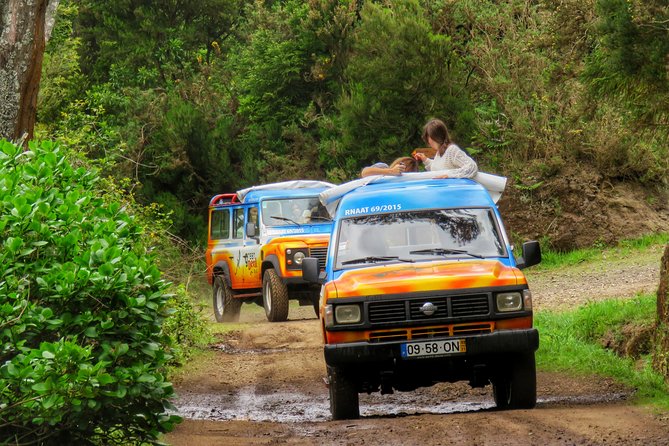
- 4WD countryside route: expect off-road-style driving segments for real “Hold on” fun, not just bus windows.
- Pick-up convenience: free in the Funchal / Caniço area, which cuts out stress on a long day.
- Sugar and rum history, hands-on: Engenhos do Norte includes steam-powered distillery machinery still kept operational.
- Local agriculture stops: Boaventura, Arco de São Jorge, and Porto da Cruz are about how people live off the island.
- Madeira-built architecture and views: Santana’s triangular thatched houses plus coastal lookouts.
- Photo-friendly rhythm: lots of short scenic breaks that help you see more in one day than you’d manage alone.
The big idea: a full day for seeing Madeira’s north fast
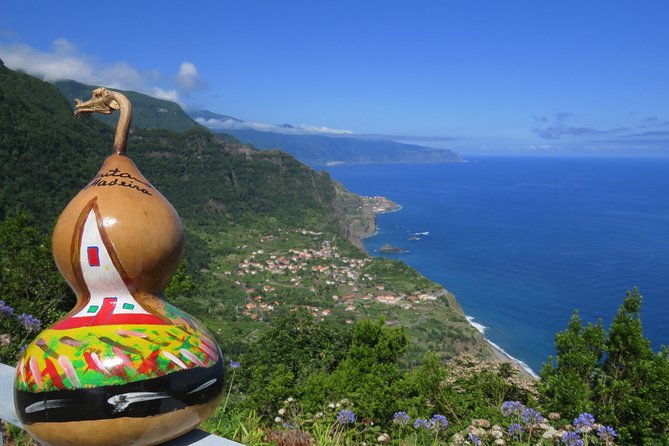
Madeira is all about microclimates. One bend in the road can mean different vegetation, different light, and a totally different “feel” to the coastline. This tour is built for that. You’re not just driving the same stretch twice. You’re working your way through Sao Vicente’s older manor-house countryside, the coastal villages, and then up into Santana’s classic northeast scenery.
The value for me is simple: you get broad coverage in one day without needing to rent a car and fight parking. You also get a guide who can explain what you’re seeing—like why these areas shaped around viticulture, sugarcane, and farming rather than big-city development. That turns the day from sightseeing into understanding.
And since it runs about 8 hours, it’s a very solid “first full day” on the island—especially if you want to learn the geography before you start making your own plans.
You can also read our reviews of more tours and experiences in Funchal

Pickup and driving in a 4WD: what to expect
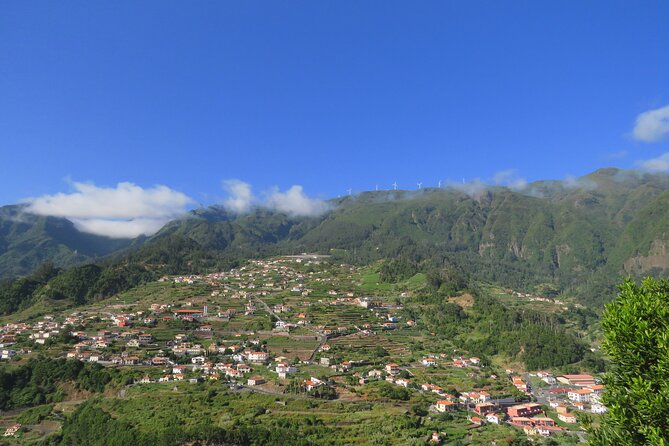
The day starts at 8:30 am, with pickup offered from Airbnb, hotels, and the cruise port. Funchal and Caniço center are free, while other areas can add a fee depending on where you’re staying.
The most practical thing to know: this is not a calm, flat ride the whole way. The experience is advertised as 4WD, and on off-road-style sections the motion can feel a bit rally-like (in good fun, but it’s still bumpy). If you’re sensitive to motion, plan for it—bring a bottle of water, keep a steady grip, and keep your phone secured.
You’ll also get a “tour rhythm” that works well in Madeira: stop, look, get the story, move on. The guide’s pace helps you avoid the classic problem of self-guided driving, where you stop at the first viewpoint and miss the better one 10 minutes later.
Price and value: $81.66 with real tradeoffs
At $81.66 per person, this isn’t a bargain tour. But it’s also not trying to be a cheap bus day. You’re paying for a local guide, pickup, a 4WD-style route, and access to a lot of different stops in one long day.
Here’s how I’d budget it honestly:
- Lunch is not included, so you’ll want to plan food timing during the Santana area stop(s).
- There can be extra costs for some pickups (the tour lists extra pickup fees for multiple areas).
- If you’re coming from a cruise, there’s a €5 per person cruise dock extra fee.
Even with those add-ons, it tends to pencil out well if:
- you don’t want to rent a car on a twisty island,
- you want north and northeast in one shot,
- you like learning from a guide instead of just collecting photos.
Stop-by-stop: Sao Vicente wine manors to Caniçal tuna village
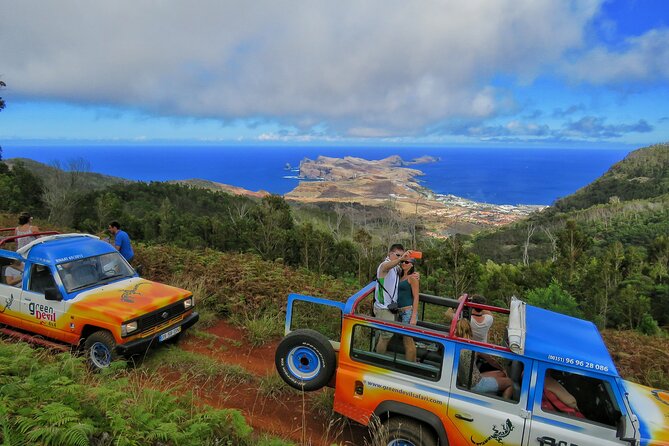
This itinerary is built around quick “see it, understand it, move on” breaks. Many stops are around 10 minutes, with Santana-style stops closer to 15 minutes, plus longer stretches of driving between them.
Sao Vicente: old manor houses shaped by viticulture
Sao Vicente is one of those places where the big stone houses feel like they were built to impress—because they were. The tour highlights the rustic manor houses that date back to the 18th century, when good wine fortunes brought economic relief and comfort. These places were organized with a first floor for winepress and agricultural tools, then the “noble” upper level reached by an outdoor staircase.
What you’ll like: you’re seeing how Madeira’s economy grew from farming, not from tourism.
What to watch for: since the stop is listed around 10 minutes, you’ll mainly get a glance and a quick orientation rather than an in-depth look.





Ponta Delgada: cliff views plus church-by-the-sea energy
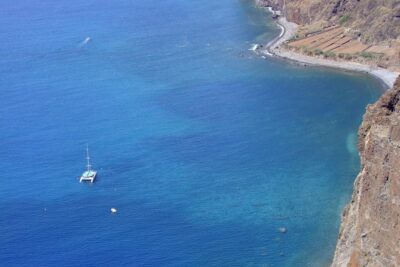
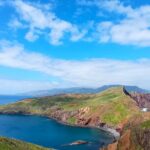
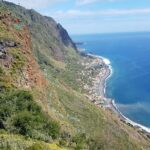
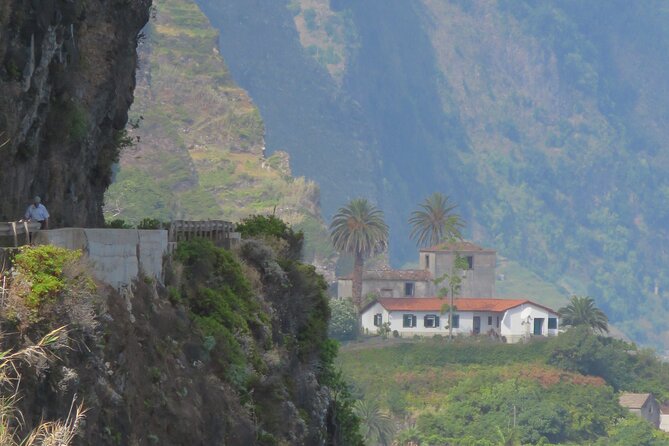
Ponta Delgada is described as a village with an economy tied to agriculture, small commerce, services, and tourism. You get the key picture: a cliffside overlook, plus views of a local church by the sea and the area’s newer pool complex.
Why it works: even in a short stop, the setting gives you that Madeiran contrast—steep terrain and human scale close together.
Drawback: short time means you’ll want to decide quickly where to point your camera.
Boaventura: quiet valleys, water channels, and a “sanctuary” feel
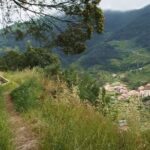
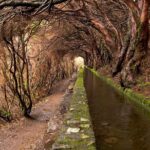
Boaventura is framed as an agricultural hillside village with valleys cut by courses of water. It’s also presented as one of the oldest colonized villages on Madeira and almost isolated from the world nearby, earning a reputation for tranquility.
What I like about this stop in the context of the whole day: it’s the “slow breath” moment. The rest of the route is scenic and historical too, but here the description leans toward calm.
Practical note: if you’re hoping to do a long walk here, the listed stop time suggests you won’t.
Arco de São Jorge: seaside village, mountains, and fertile microclimate
Arco de São Jorge sits by the sea, backed by mountains and vineyards in Madeira’s northeast. The village is small, and the land is described as extremely fertile because of its microclimate—meaning different crops can thrive here compared to other parts of the island.
Why it matters: the island’s “north vs. south” feel isn’t just scenery. It’s agriculture.
Watch for: the 10-minute window. This is about seeing the setting, not exploring every side street.
Santana: iconic triangular houses plus access to the levadas area
Santana is a major payoff. You’re in a region described as a launch point for some of the best levada walks through the Laurisilva forests—routes like Queimadas and Pico das Pedras are mentioned, and for the truly fit, Pico Ruivo is referenced as Madeira’s high point at 1861 m.
Then you also get the “postcard Madeira” architecture: Quinta do Furão is described as a manor house surrounded by vineyards on a cliff top with ocean and coastline views.
What you’ll like: Santana connects what Madeira looks like with what Madeira does—forests, water channels, and farming.
Potential drawback: because the stop is 15 minutes, you’ll have time for highlights, not a full hike.
Casas Típicas de Santana: the triangular thatched houses
Next, you get dedicated time for the typical houses. These are triangular homes built of stone with straw thatch roofs, said to have origins in the 16th century. Today, many are kept as a tourist attraction.
Why this is worth including: it’s one of the most recognizable “Madeira identity” visuals, and it’s quick to enjoy without planning a separate detour.
What to watch: if you’re photographing, check the lighting angle since roofs and narrow shapes can be tricky from one side.
Fortim do Faial: viewpoint history with English-origin artillery
Fortim do Faial is described as a viewpoint space used starting in the early 20th century, and it still keeps that role. The highlight here is a display of 10 smooth-sided ante-artillery pieces of English origin, assembled in naval repairs. The tour also notes that traditionally these guns were used on feast days honoring Our Lady of the Nativity.
Why it’s a good stop: it adds variety. Most of the day is nature and agriculture; this adds coastal defense history.
Possible drawback: again, 10 minutes means you’ll absorb the gist, not read every detail.
Porto da Cruz: sugarcane roots, rum and honey molasses
Porto da Cruz is linked to Portuguese explorers through a cross placed on shore to indicate the port. The tour points to sugarcane as the historical engine, and today the processing factory is said to still be active. It produces rum and honey molasses (with operations traced back to 1927), plus a dry red wine called vinho seco. A grape festival is hosted each year.
This stop is a great “how Madeira works” moment. A lot of islands use tourism storytelling. Here you get an agricultural story that became industrial.
Note for timing: it’s listed as a 5-minute stop, so you’ll mainly get a sense of place.
Engenhos do Norte: steam-powered distillery machinery still operating
Engenhos do Norte follows the sugar theme and gets more specific. It’s described as an ancient rum distillery where steam engines set the working pace, and where the equipment is still kept operational by original workers.
Why I’d prioritize this: you don’t just hear about history—you see working machinery. That’s the difference between “a photo stop” and “a stop that adds meaning.”
Drawback: with limited time, you’ll want to focus on the machines and the explanation rather than try to spot every detail.
Caniçal: tuna, reeds, and arid-area fishing roots
Finally you reach Caniçal, described as a small fishing village where tuna is the main catch. The name is connected to reeds (caniço) that grew in more arid areas of the parish, and those reeds were originally used as fishing rods—showing how fishing shaped daily life from early settlement.
Why it closes well: after agriculture, vineyards, and distilling, you end with sea life. It rounds out Madeira’s food and economy story.
Guide quality: why names like Jose, Duarte, and Leno/Lino keep showing up
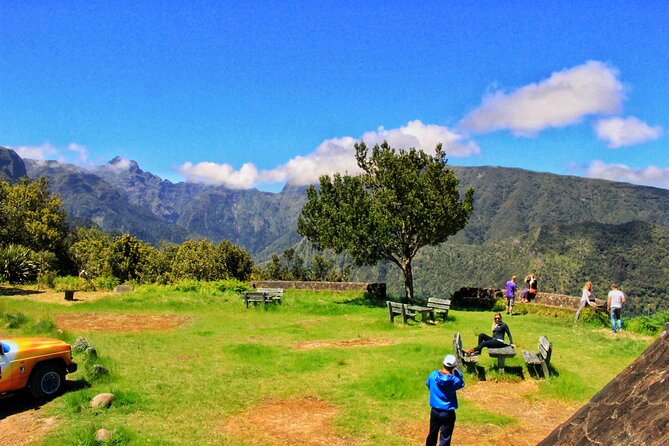
This tour’s biggest asset isn’t the route—it’s the human pacing. In feedback, guides like Jose, Duarte, and Leno/Lino come up with the same theme: they explain plants, landscape, and local context clearly and at a pace that makes the day feel personal.
You can also feel the difference in how timing gets handled. One example in feedback describes extra time in the Machico area when a folklore festival was happening, which is the kind of adjustment that helps a “drive-by” route become a day with real moments.
If you’re someone who likes to understand why Madeira looks the way it does, this is a strong pick. If you don’t care much about explanations and just want maximum stops for maximum photos, you might still enjoy it, but you’ll value the 4WD ride and views more than the stories.
Food and drink: what’s included, what’s not, and where the day points you
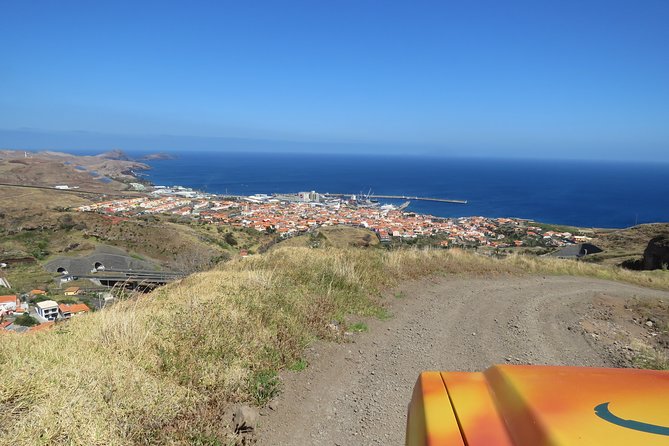
Lunch is not included, so plan to eat on the road or during the Santana segment when you have the best chance to stop for food.
Even though lunch isn’t part of the price, the tour does point you toward food-and-drink culture in other ways. Porto da Cruz is tied to sugarcane processing and rum, and Engenhos do Norte is the rum distillery stop. On top of that, the tour context includes wine references across multiple stops, from the viticulture-linked houses of Sao Vicente to the dry red wine term at Porto da Cruz.
This matters for value. You’re not paying for lunch, but you are paying for the chance to taste and learn about the island’s main flavors—especially rum and Madeira’s agriculture-led food story.
Who this 8-hour northeast 4WD day is best for
This is a strong fit if you:
- want a first full day that covers a lot of Madeira without car rental stress,
- like nature plus practical local context (agriculture, distilling, fishing),
- enjoy short stops paired with scenic driving,
- are fine with some bumpy off-road-style movement.
It’s also a decent choice if you’re traveling with family and want a guide-managed day, as long as everyone is okay with the shorter visit times.
You might want to skip or adjust expectations if you:
- hate motion in cars,
- need long time in each place to feel satisfied,
- plan to do serious levada hiking the same day.
Should you book this Santana Wonders and Northeast 4WD tour?
If you want Madeira without the “Where do I even go?” question, I’d book it. The route is built to show you a working picture of the island—north coastline, northeast agriculture, and the rum-and-sugar machinery—plus it solves logistics with pickup from Funchal and Caniço.
My main caution is time. The stops are short, so treat this as a fast sampler with guided context, not a slow wandering tour. If you’re good with that tradeoff, you’ll likely come away with a strong first impression of Madeira’s variety.
If you can, show up early, keep water handy, and go with the mindset that the guide’s explanations are part of the experience, not extra.
FAQ
What time does the tour start?
The tour starts at 8:30 am.
Is hotel pickup included?
Yes. There is free pick up in the Funchal and Caniço area, and pickup is offered from Airbnb, hotels, and the cruise port (with extra fees depending on location).
How long is the full-day tour?
It runs for about 8 hours.
How much does it cost per person?
The price is $81.66 per person.
What language is the tour offered in?
The tour is offered in English.
Is lunch included in the price?
No, lunch is not included.
Are admission tickets included?
The listed stop information says admission ticket free for the stops shown.
Is there an extra fee for cruise dock passengers?
Yes. There is a cruise dock extra fee of €5.00 per person.
What’s the maximum group size?
The tour has a maximum of 50 travelers.
Can I cancel for a full refund?
Yes. There is free cancellation, and you can cancel up to 24 hours in advance for a full refund.